

Hiking in heat : 5 simple ways to cool down
Hiking in the heat this summer? Read these 5 simple tips, from our hiking guides and backed by science!

If you’re hiking in the Tour du Mont Blanc (TMB), the Haute Route or one of the Alta Vias this summer, you’ll probably be hiking in heat! We’ve already experienced several early summer heatwaves, with temperatures soaring well above average. While the mountains are often cooler than the valleys, long climbs through sweaty forests can still make for tough conditions.
The good news? You don’t need fancy gadgets to stay cool. A few simple tricks, many backed by science, can make a huge difference to how comfortable you feel. They will also help reduce your risk of heat exhaustion.
Here are our favourite ways to beat the heat on the trail. We’ve learnt most of these through experience. Between guiding, ultra-running and alpine climbing, we’ve spent more than our fair share of hot days in the mountains! But rather than relying on anecdotes alone, we’ve also spent time reading the research and linking to the studies that support them.
Hiking in heat? 5 ways to keep cool
When you’re already feeling hot, these are the tricks that make the biggest difference. Most take just a few seconds, cost nothing, and can help you stay comfortable even on the hottest days.
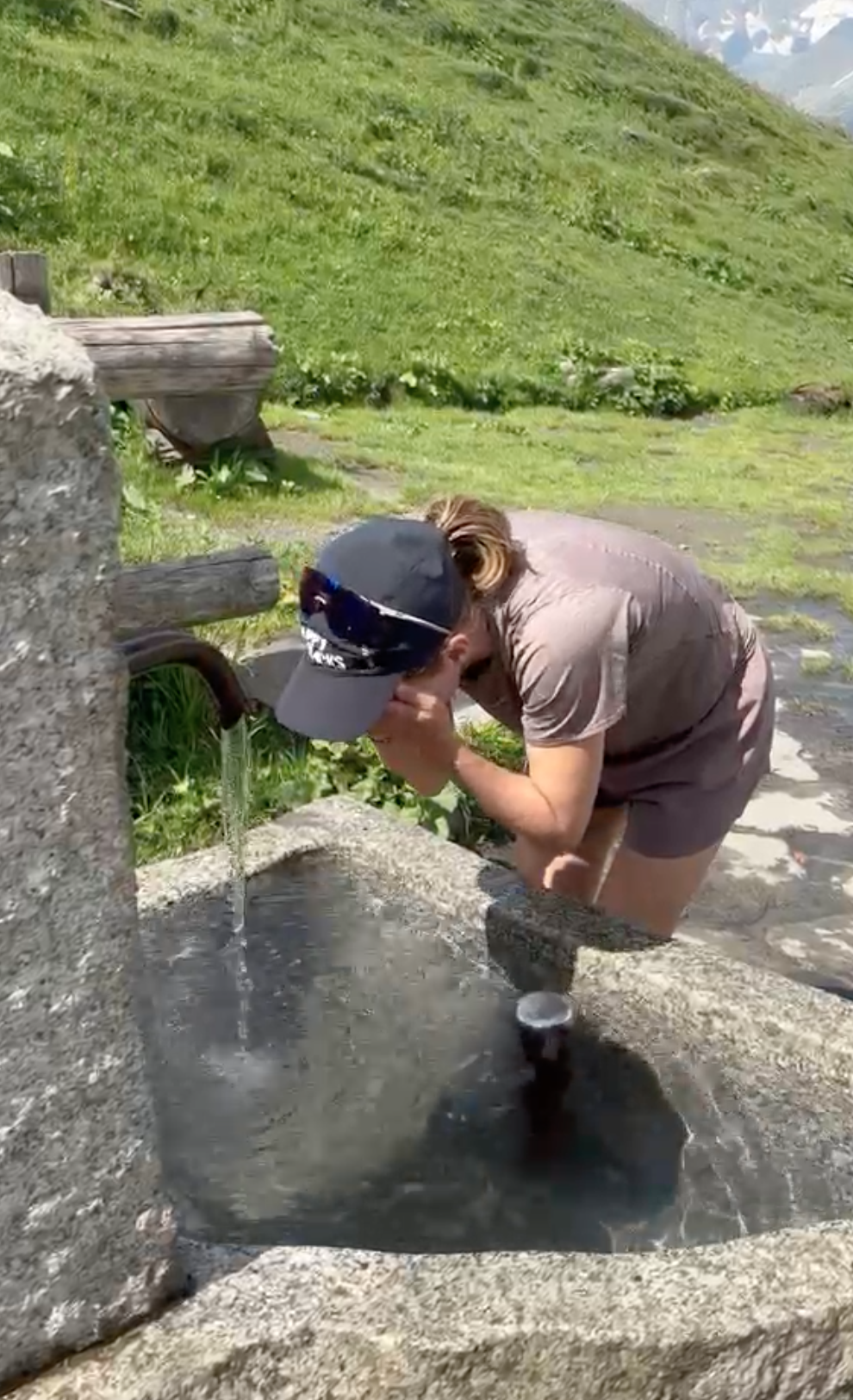
1. Dunk your head! (top tip for hiking in heat)
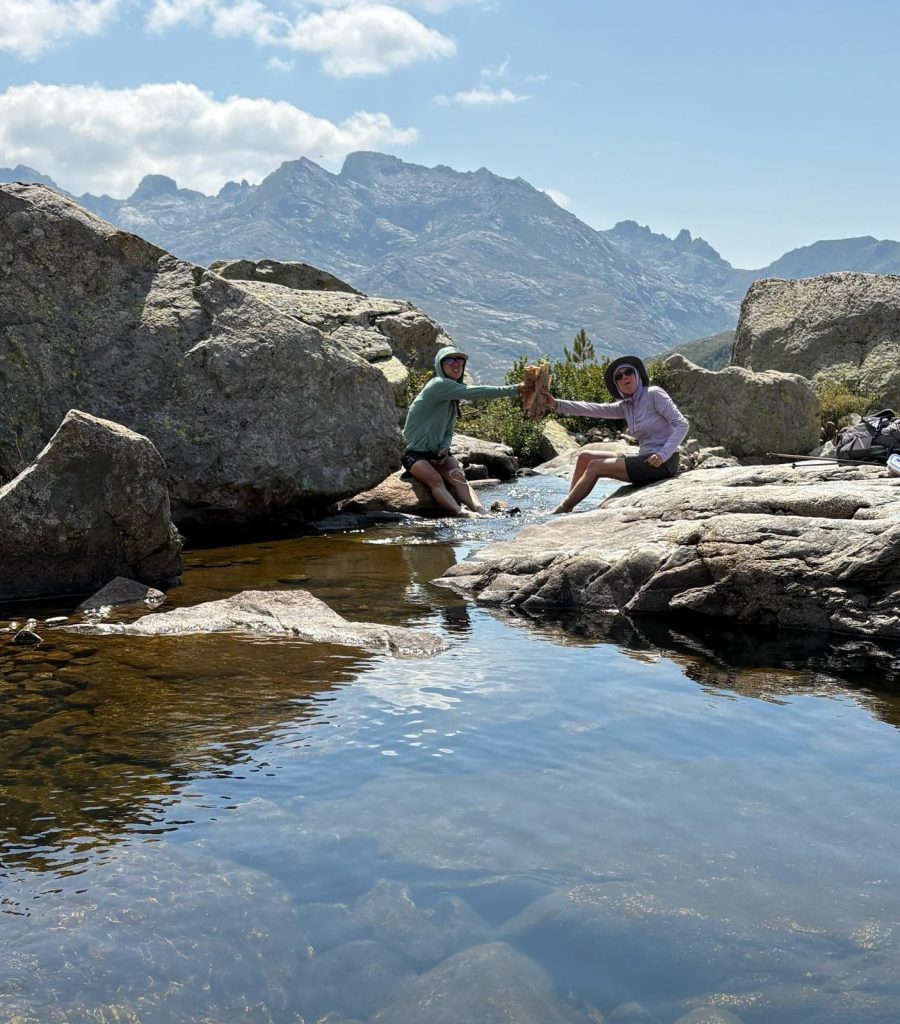
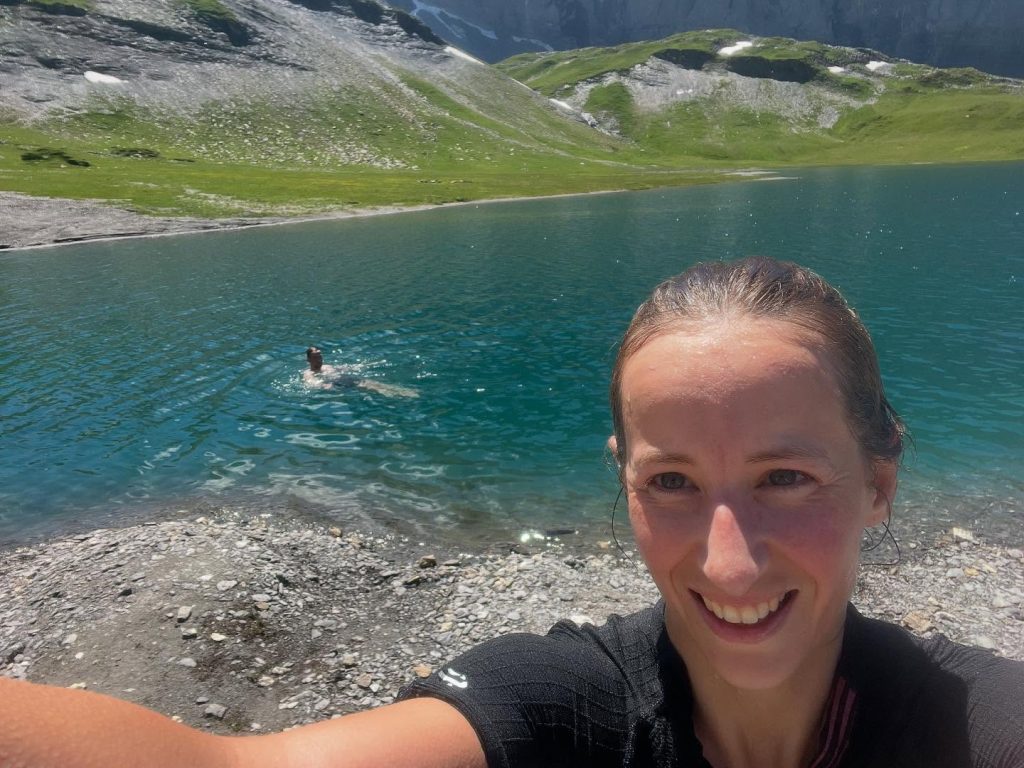
If you pass a fountain, stream or lake, take advantage of it.
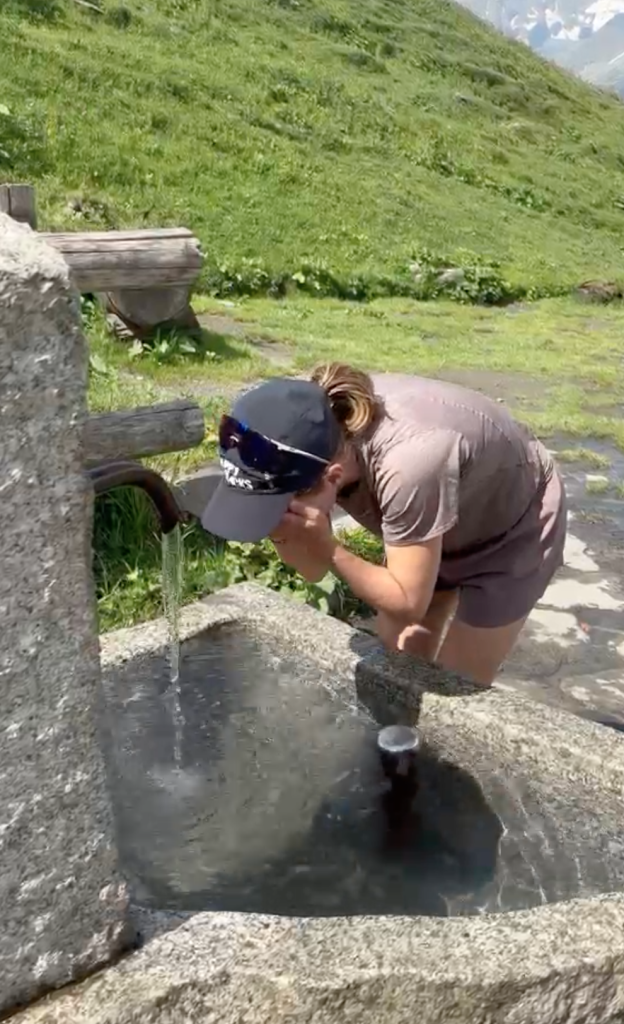
Dunking your hands, forearms, face, and head is particularly effective, because they have high blood flow and lots of surface area. Because of this, your core temperature drops significantly. As the water evaporates, it carries heat away from your body. This is one of most effective ways to cool down when hiking in the heat.
Mountain villages and refuges often have drinking fountains, so make it your habit to soak yourself at every opportunity.
2. Soak your buff
If you’re carrying a buff, bandanna or lightweight hat, soak it whenever you water. As the water evaporates, it absorbs heat from the fabric and your skin, creating a natural cooling effect. This works especially well in the mountains because the air is often dry. Even a light breeze speeds up evaporation, so soaking your clothing keeps you cool for much longer.
Pro tip: Re-wet your buff whenever you have the chance. On a hot day, we rarely pass a fountain without giving ours another soak!
3. Put snow in your hat
One of the perks of hiking in the mountains is that snow lingers well into summer. This is especially true of the TMB and Haute Route (see our conditions report here for examples).
There was a heatwave during my last trail race. I was really starting to struggle – getting cramps and feeling nauseous – but then I passed some snow. I stuffed it into my hat and down my top, and I felt 100% better within minutes!
– Charlie.
When you pass snow, tuck a handful into your hat or wrap some in a buff around your neck. The snow melts surprisingly slowly, dripping refreshingly cold water down you for the next section of trail!
4. Counter-intuitive tip for hiking in heat : cover up!
When the temperature climbs, it’s tempting to strip down. In fact, the opposite is often a better strategy.
Loose-fitting clothing creates a layer of shade over your skin. This reduces the amount of heat you absorb from the sun, while also allowing air to circulate. Choose lightweight, breathable fabrics such as merino wool or woven polyester / nylon. These modern fabrics wick sweat away from your skin and dry quickly. Cotton is comfortable for short walks but becomes heavy and stays wet once it’s soaked with sweat, making it less suitable for long mountain days.
Does fabric colour count when hiking in heat?
Yes! Colour makes a difference, although not as much as people think. Light-coloured clothing reflects more of the sun’s radiation than dark colours, but the cut and breathability of the garment are usually more important. A loose, airy long-sleeved shirt will often keep you cooler than a tight white T-shirt.
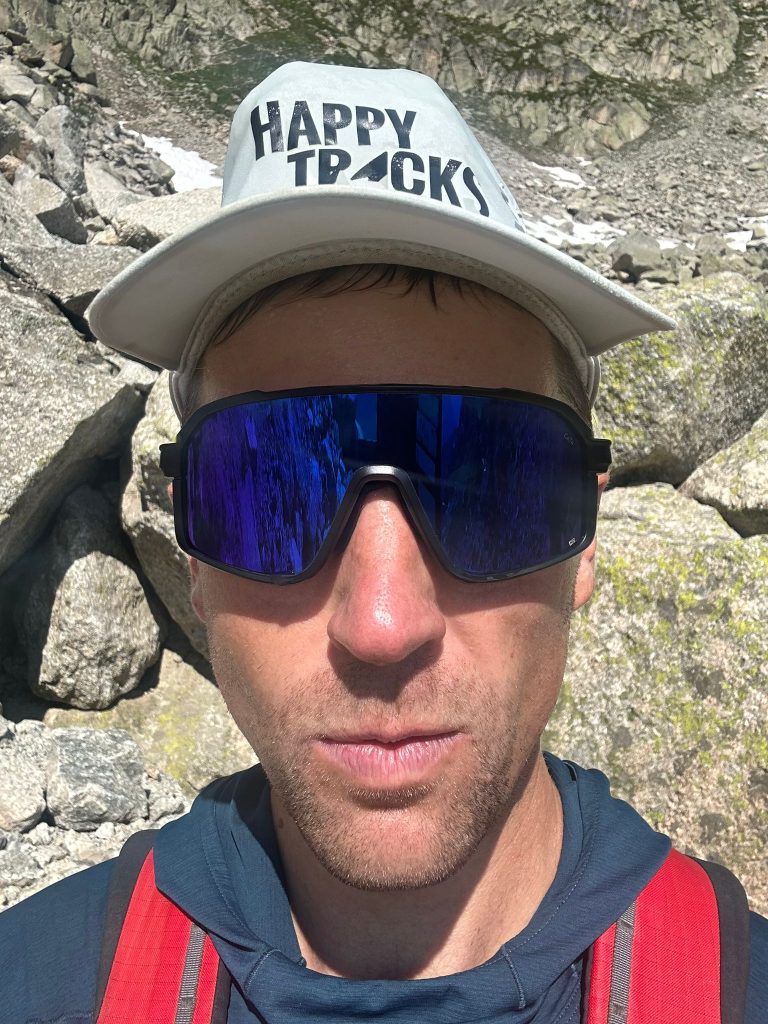
Don’t forget to cover your head!
A wide-brimmed hat protects your face, ears and neck from direct sun. Alternatively, a lightweight shawl draped over your neck and shoulders provides extra shade without trapping too much heat. If you dampen the fabric first, you’ll also benefit from evaporative cooling as it dries.
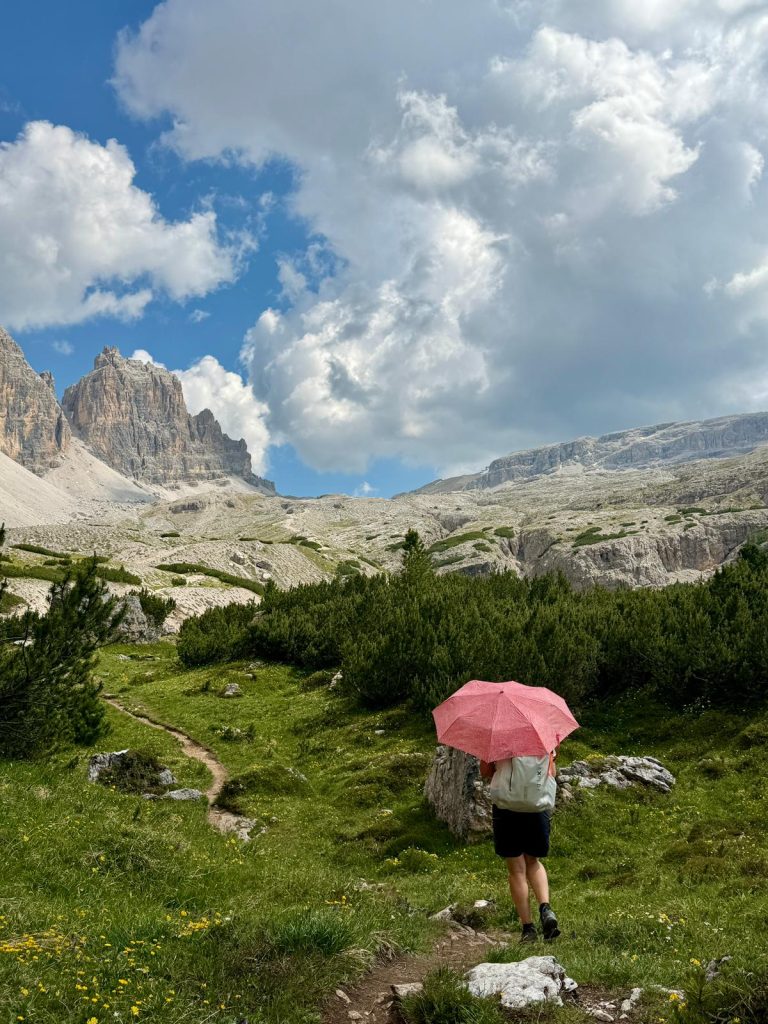
Umbrella – a lesser-known trick for hiking in heat
Finally, don’t dismiss the humble umbrella. By creating your own portable patch of shade, a reflective hiking umbrella can dramatically reduce heat exhaustion on exposed trails.
Usually it’s just me who uses an umbrella! The hikers I am guiding normally need both hands!
– Sarah
The downside to hiking in heat with an umbrella is that you can’t use poles! They can also be awkward in strong winds!
5. Slow down
It might sound obvious, but one of the best ways to cool down is simply to ease your pace. Every step uphill generates heat, and the harder you work, the more heat your body has to shed. Slowing down, especially on steep climbs, reduces the amount of heat your muscles produce and gives your body a better chance of keeping cool.
This is particularly important during long ascents above the treeline, where there’s little shade and the midday sun is at its strongest. A slightly slower pace may only add a few minutes to your day, but it can make a huge difference to your risk of overheating.
Pro tip: If you can still hold a conversation while climbing, you’re probably moving at a sensible pace for hot conditions.
Hiking in Heat: Myth Busting
There are plenty of tips for staying cool online. Some are backed by science, while others are a little more questionable.
❌ Myth: Cooling your wrists is the best way to lower your body temperature.
Cooling your wrists can feel refreshing, but there’s nothing magical about them. If you have cold water available, you’ll cool yourself much more effectively by wetting your hands, forearms, face, neck and head, increasing the total area your body can use to lose heat.
❌ Myth: The less clothing you wear, the cooler you’ll be.
In direct sunshine, loose, breathable clothing often keeps you cooler than exposed skin. It reduces the amount of solar radiation reaching your body while still allowing sweat to evaporate.
❌ Myth: Dark clothing is always hotter than white.
Colour matters, but not as much as people think. A loose, breathable shirt will usually keep you cooler than a tight shirt, regardless of colour. Fabric choice, airflow and fit are generally more important than whether your shirt is black or white.
❌ Myth: You should only drink when you’re thirsty.
Thirst is a useful signal, but it doesn’t always keep pace with your body’s fluid needs during long, hot hikes. It’s usually better to drink small amounts regularly throughout the day rather than waiting until you’re very thirsty.
❌ Myth: Fit people don’t suffer from the heat.
Fitness certainly helps, but it doesn’t make anyone immune to heat illness. In fact, experienced runners and hikers can sometimes push themselves harder than they should. The most important thing is to recognise when conditions are becoming unsafe and adjust your pace or plans accordingly.
Final Thoughts
Hot weather doesn’t have to stop you enjoying classic hiking routes such as the TMB, the Haute Route or the AV1. With a few simple cooling tricks up your sleeve (or tucked into your buff!), you’ll stay more comfortable and reduce your risk of heat-related illness.
Most importantly, listen to your body. If you stop sweating, feel dizzy or nauseous, or simply can’t cool down, it’s time to take a break, find some shade and rethink your plans. The mountains aren’t going anywhere, and there’s no shame in shortening a hike when temperatures are exceptionally high.
The hikers Newsletter
Get trekking info and our latest deals.
