

Look down! Early-season TMB flowers

For wildflowers, the Tour du Mont Blanc (TMB) can be thought of as four distinct worlds stacked on top of one another. Over a typical day, the TMB flowers change dramatically as you climb. From fragrant valley meadows buzzing with life, to wild, windswept passes. Here, only the toughest, most specialised flowers survive, nestled up to the melting snow.
Nothing quite prepares you for the scale of the Mont Blanc massif. There are points on the TMB where these mountains stand directly opposite you and feel so unimaginably large. Because of this, it’s difficult to take your eyes off them. Yet beneath the hanging glaciers and granite needles lies an equally impressive world : the quiet world of alpine flowers.
In this article, we’ll showcase some of our favourite early-season TMB flowers (from June – early July). We’ll also share some fascinating insights into how they survive the harsh conditions of alpine spring. All this information comes from our team of local guides. We hike the same trails week after week, watching these TMB flowers change throughout the season. For more information on the Tour du Mont Blanc itinerary, visit our main TMB page here.
1. Valleys and forests: In Full Bloom
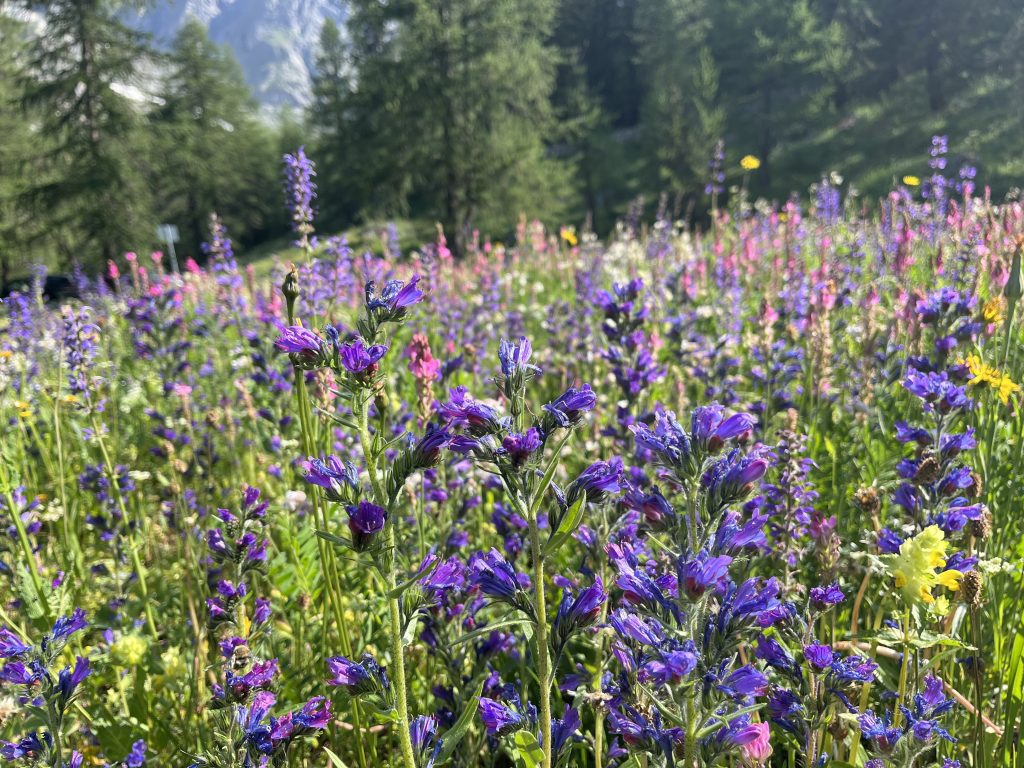
Most visitors arrive in Chamonix looking up at Mont Blanc, but the valley offers plenty of reasons to look down. Beyond the town’s colourful, geranium-filled balconies, the valley meadows are bursting with wildflowers.
Thanks to their warmer temperatures, deeper soil and longer growing season, these lower valleys are home to some of the richest displays of TMB flowers. Globe flowers, clover and cranesbills paint the grass in shades of yellow, pink and purple.
From the Chamonix Valley, you’ll climb into a succession of distinct valleys. From the hay meadows of Val Montjoie to the glacial landscapes of Val Veny, then onto Switzerland’s Val Ferret and Trient Valley.
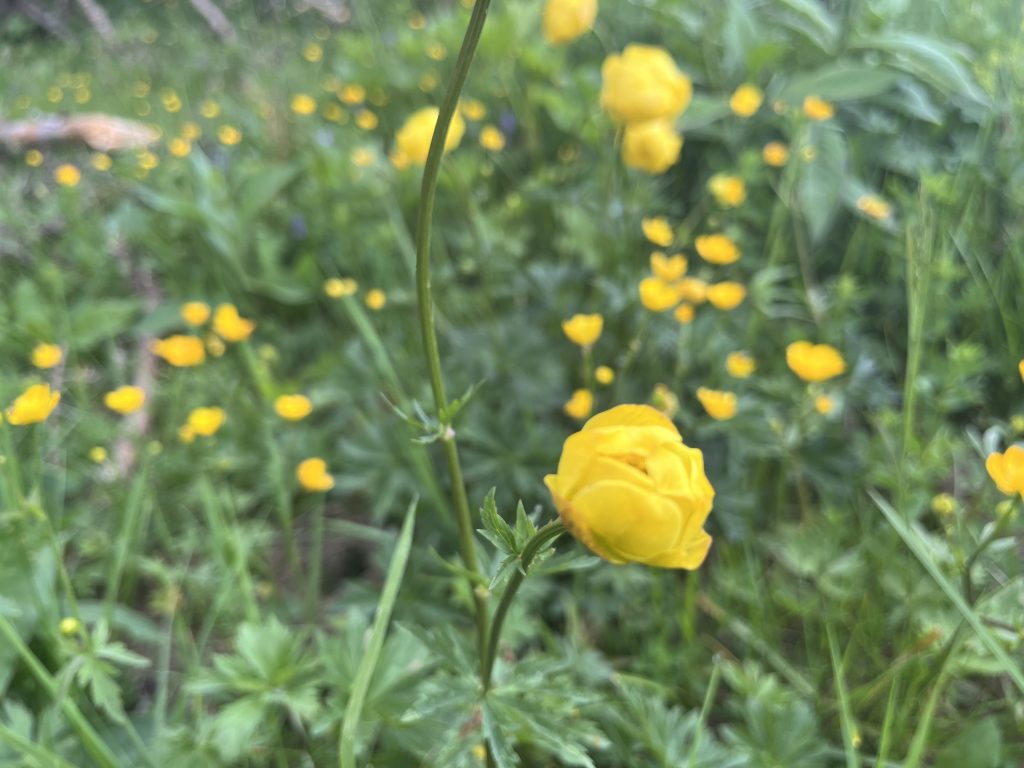
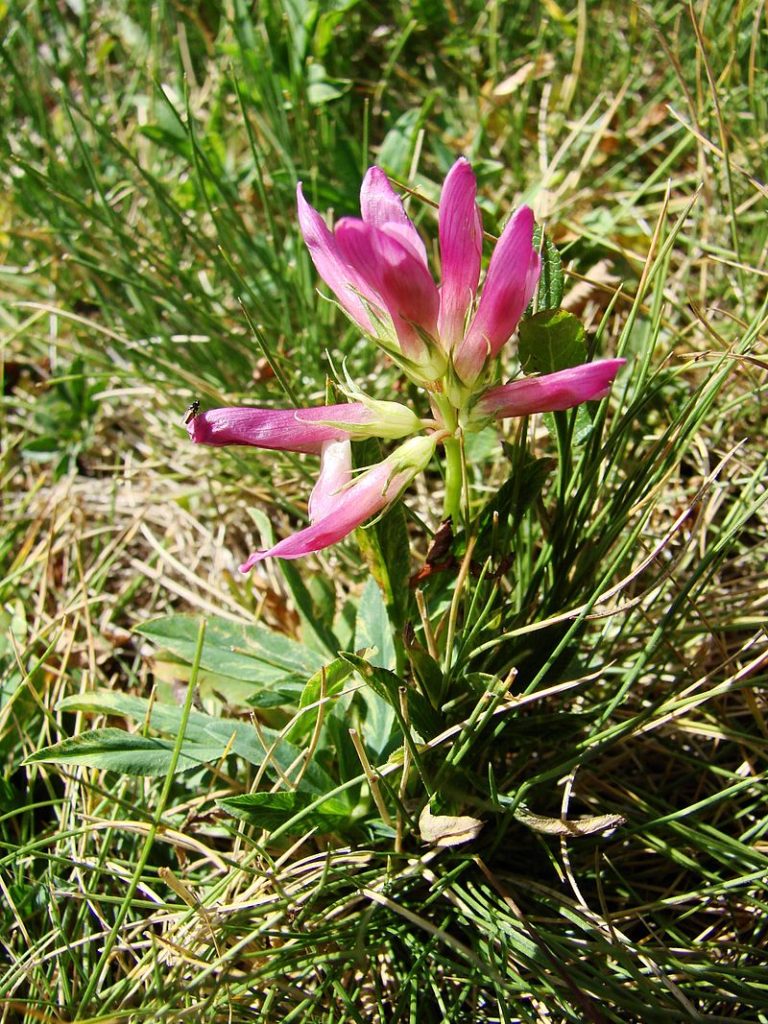
From mid-June, wild strawberries line the trail, tempting you to pause and pop one into your mouth every few minutes. Around them, butterflies drift between the flowers, bees hum, and ants go about their business.
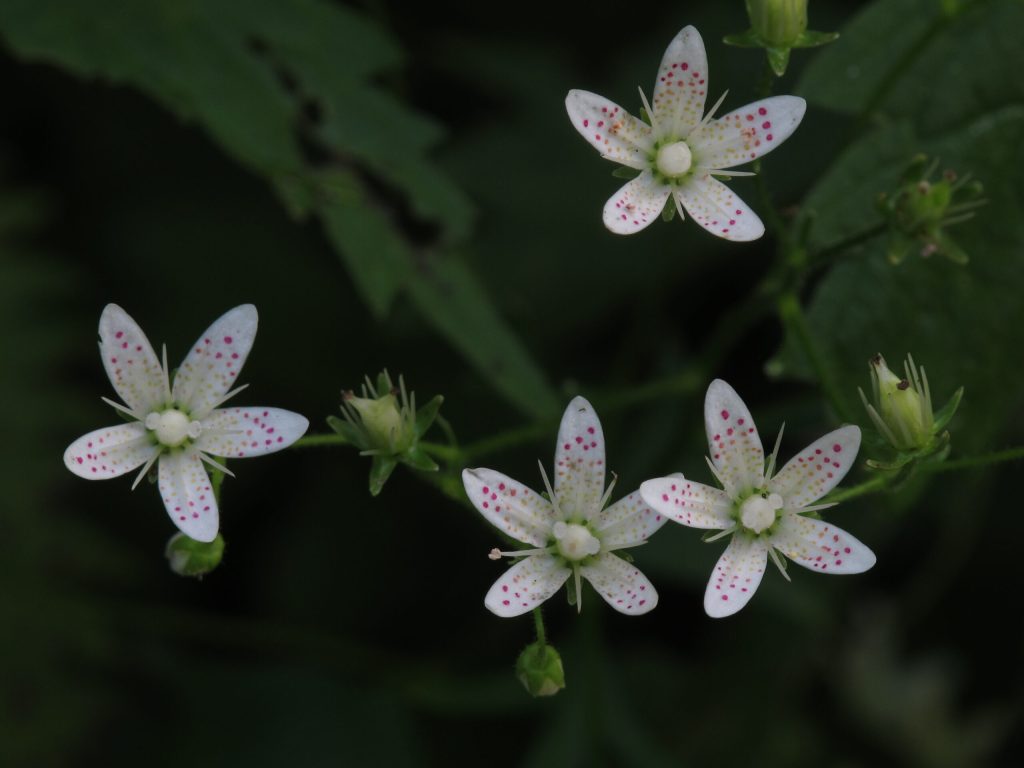
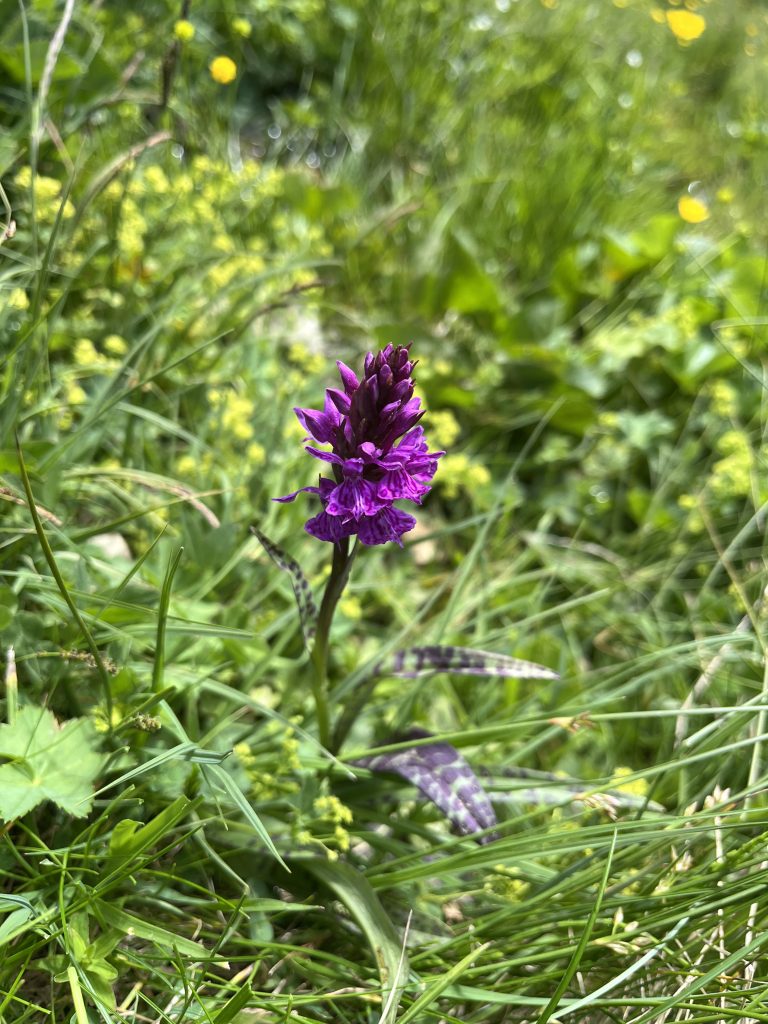
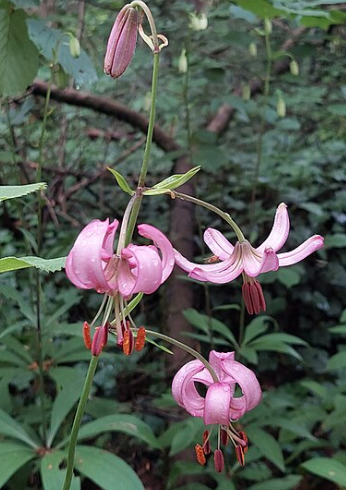
As the trails climb out of the valleys the open meadows give way to forests and shady clearings. Here you’ll encounter a different cast of flowers. Look for spotted orchids and the delicate white saxifrage. As we get into July you might see the first Martagon Lilies…
Fun Fact from our Guides
A martagon lily can take up to seven years to flower from seed! Their petals curl so far backwards that the flower resembles a Turkish turban, which is why it’s sometimes called the “Turk’s cap lily.”
2. Rhododendron Belt: A Sea of Pink TMB Flowers
Perched between the valleys and the high alpine meadows, the rhododendron belt marks a transitional “combat” zone. Forests begin to lose their grip on the mountain; the trees grow smaller and shrubbier, and gradually surrender to open slopes.
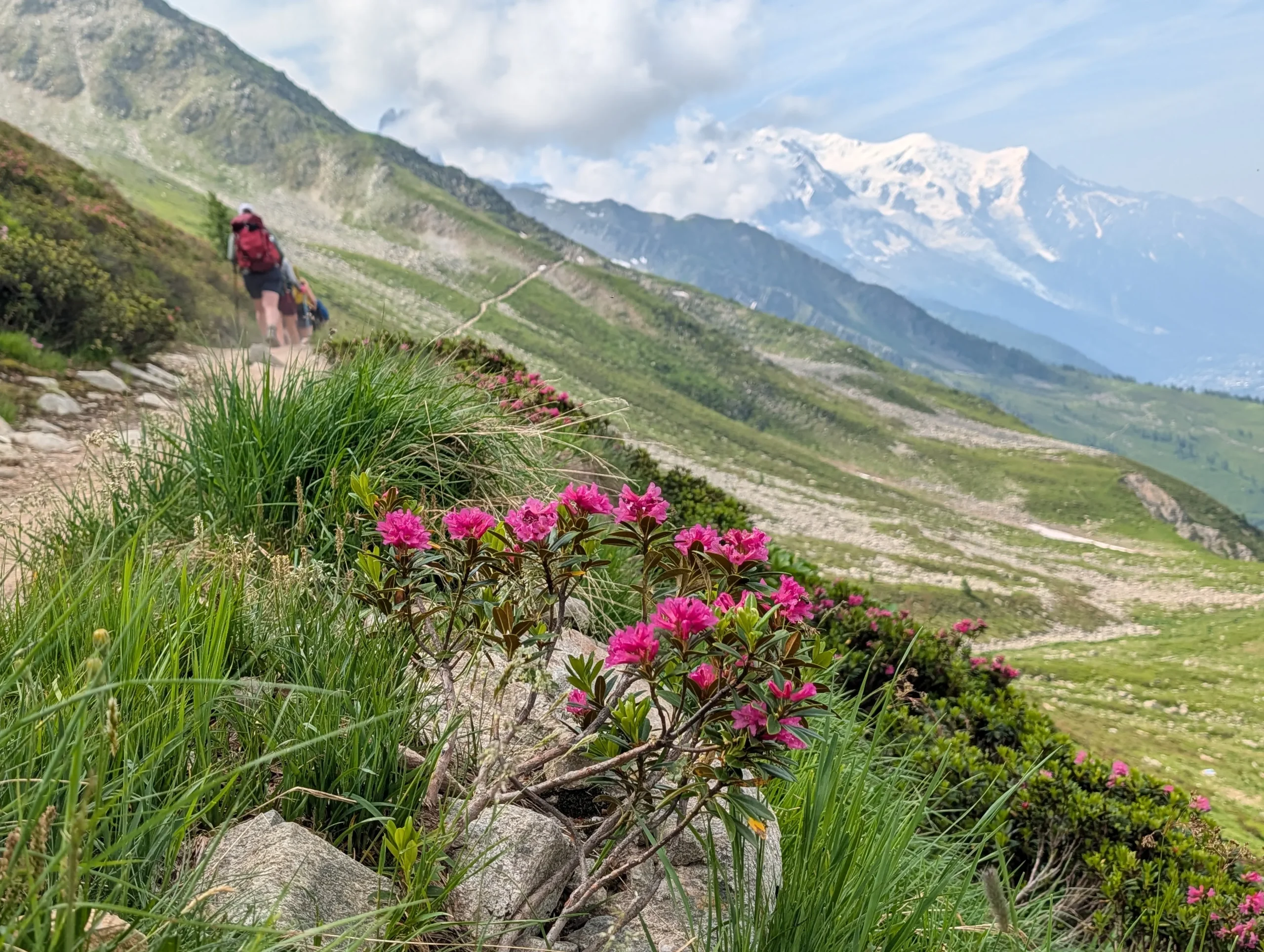
This is the realm of the alpine rose (Rhododendron ferrugineum), a bright wild rhododendron, and one of the most iconic TMB flowers.
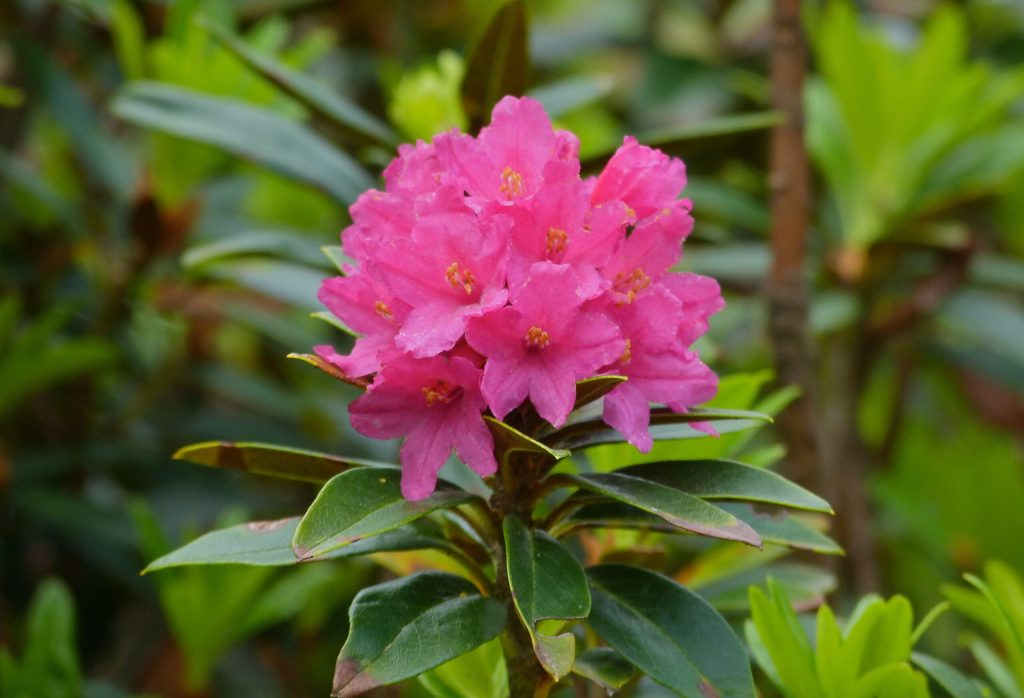
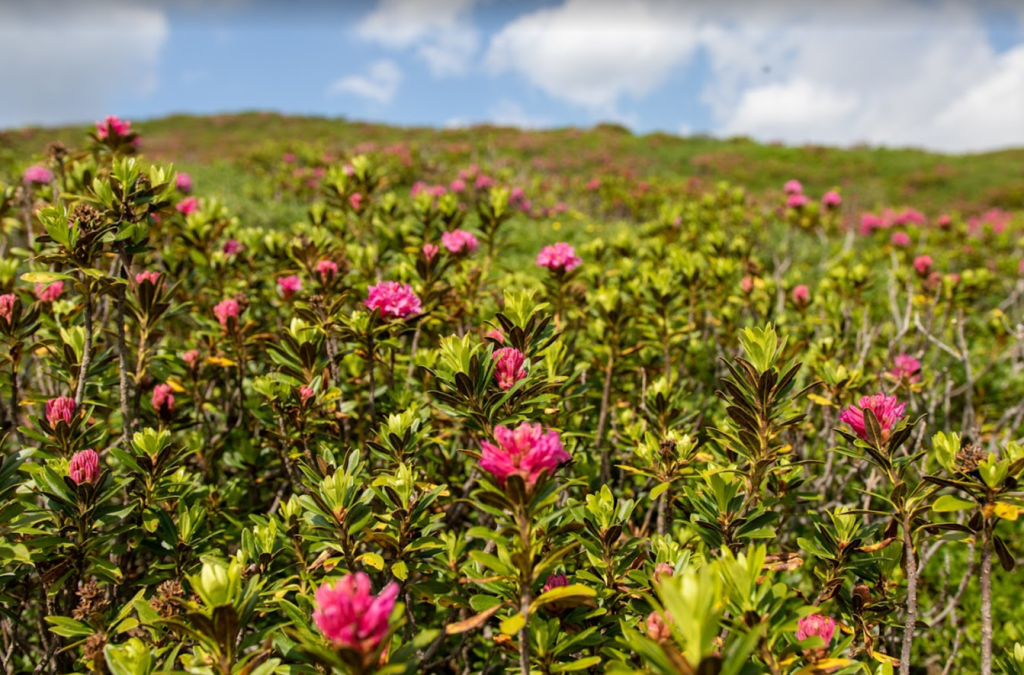
By July, these slopes erupt into shades of pink, but in June the display is still gathering momentum. Here and there, in little sheltered spots, the first rhododendrons are beginning to flower. After months beneath the snow, these early blossoms are the pioneers of the alpine summer. Spotting one can feel more rewarding than seeing an entire hillside in bloom.
You can see the first blossoms on the Bovine route in Switzerland and along sections of the famous Bonatti balcony trail in Italy.
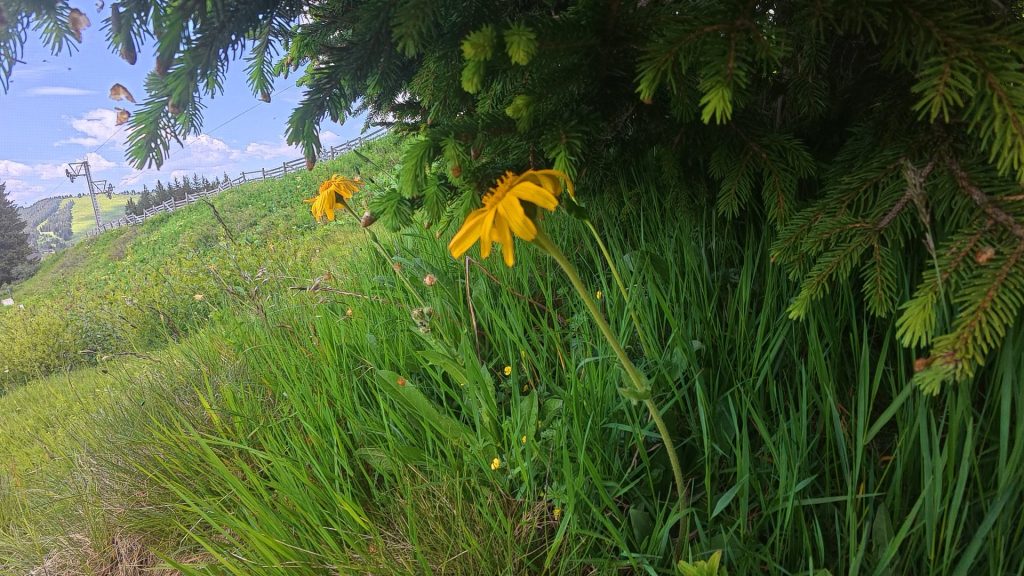
This altitude band is also home to arnica, bellflowers, and wild thyme. As the snow retreats and the days lengthen, the shrubs and spiky grass hum with insects. Marmots emerge from their burrows, and ibex nibble lichen from rocks.
Fun Fact from our Guides
Look at the underside of an alpine rose and you’ll find rusty-coloured spots on its leaves. This is where the plant gets its scientific name, Rhododendron ferrugineum; “Ferrugineum” means rust-coloured.
3. Alpine Meadows : The Most Iconic TMB Flowers
Above the rhododendron-covered slopes and the last scattered trees, the landscape opens into vast alpine meadows.
You’ll encounter this habitat on some of the TMB’s highest and most memorable sections, including the Col de la Seigne, Grand Col Ferret and the meadows surrounding Lac Blanc. Here, flowers stay low to the ground to survive strong winds, freezing nights and a long winter beneath the snow.
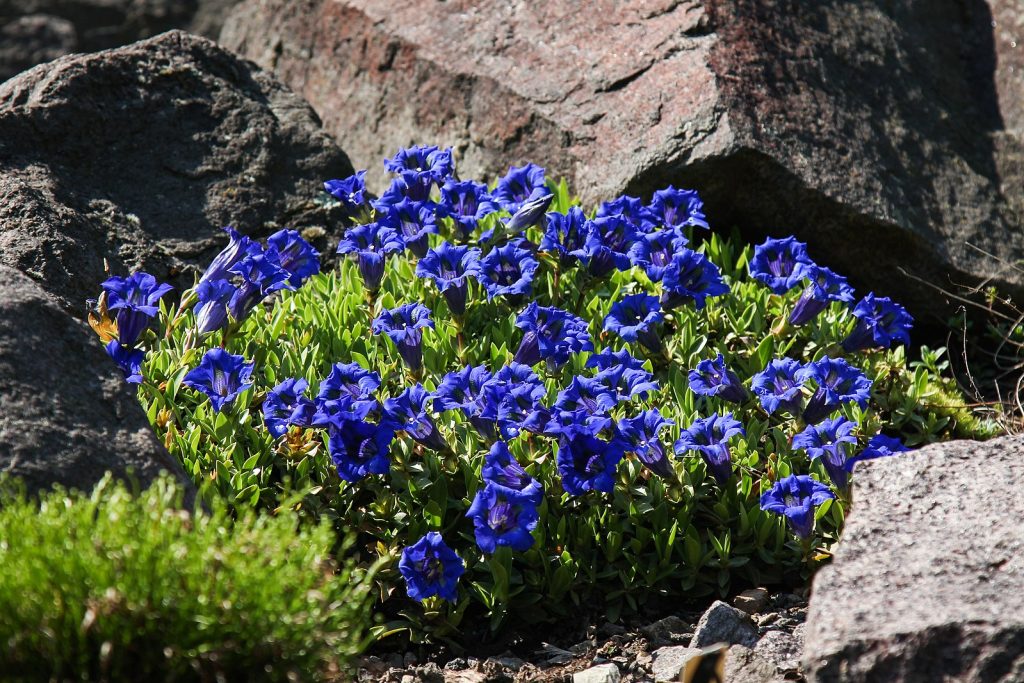
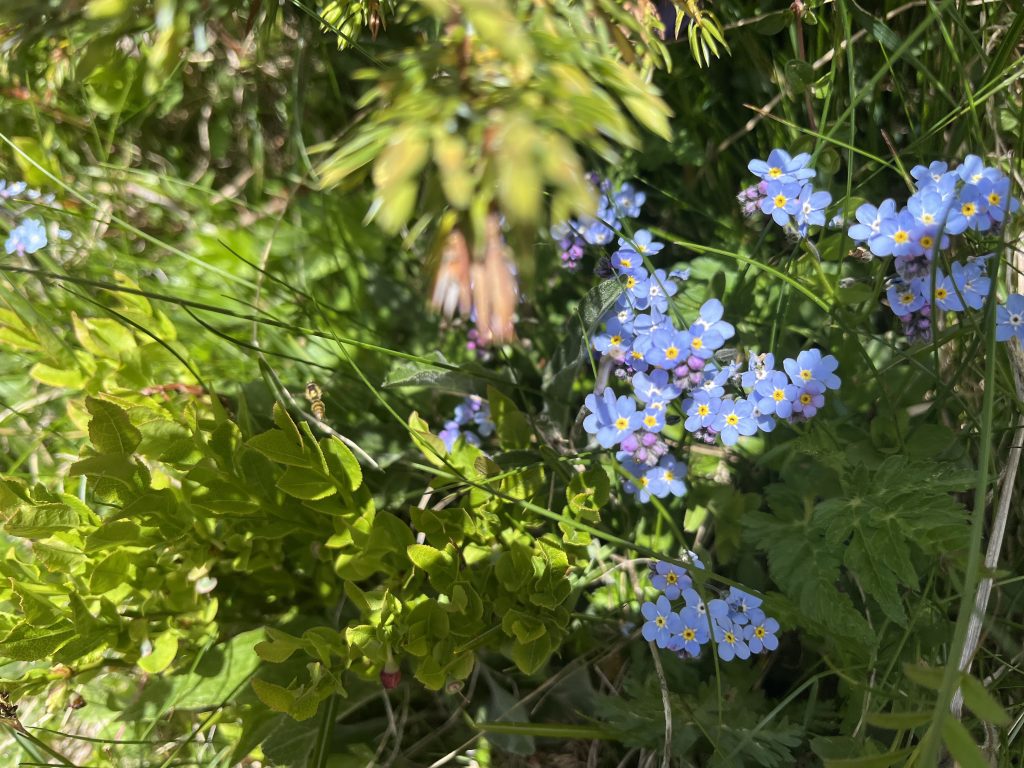
In the early season, these meadows can still look subdued. The grasses are often flattened by months under snow, and much of the landscape remains brown or pale green. But look closely and you’ll spot the first gentians, alpine forget-me-nots and mountain pansies.
FUn Fact From Our Guides
Trumpet gentians survive the harsh alpine climate by staying low to the ground. Here temperatures can be several degrees warmer than just a few centimetres higher. Their deep blue, trumpet-shaped flowers act like tiny solar collectors. They absorb heat from the sun and create a warm environment for visiting insects.
4. Rock Gardens: TMB Flowers Against the Elements
By the time you reach the highest parts of the Tour du Mont Blanc, winter is far from over. In June, the high passes are often covered in a thick blanket of snow (see our TMB conditions page here), hiding the flowers and protecting them from the elements.
But as the snow slowly retreats, tiny pockets of ground are exposed to heat and sunlight. Within days, some of the Alps’ hardiest flowers begin to emerge, taking advantage of one of the shortest growing seasons in Europe.
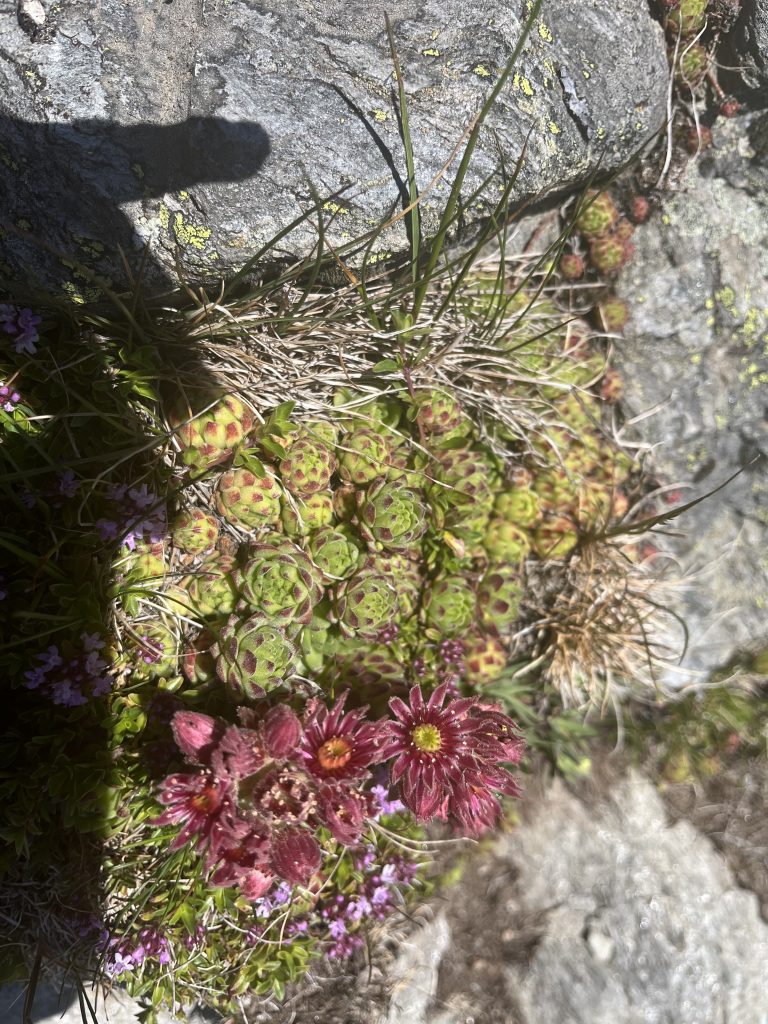
If you’re hiking early in the season, you may not see many of these flowers. But by late June and early July, species such as soldanella, alpine candytuft and houseleek start to appear.


Fun Fact From Our Guides
The scientific name for the house leek (Sempervivum) means “always alive”. By storing water in its thick leaves and growing close to the rock, this remarkable plant can survive some of the harshest environments on the TMB.
Early-season TMB flowers : first blooms
The TMB is an epic journey, and the big views are one of the things that make it so memorable. But slowing down to notice the wildflowers, and the story of survival behind each bloom, adds another dimension to the hiking experience. If you’re hiking in June or early July, you won’t see every TMB flower, but you’ll witness something special.
We’ve created this short video on early season TMB flowers to give you a more clear idea of what the trails can feel like…
We’ll be back later in the season to showcase the next TMB flowers as the snow retreats and the high meadows come to life.
The hikers Newsletter
Get trekking info and our latest deals.
