

Training for the Haute Route : When Life Gets Busy

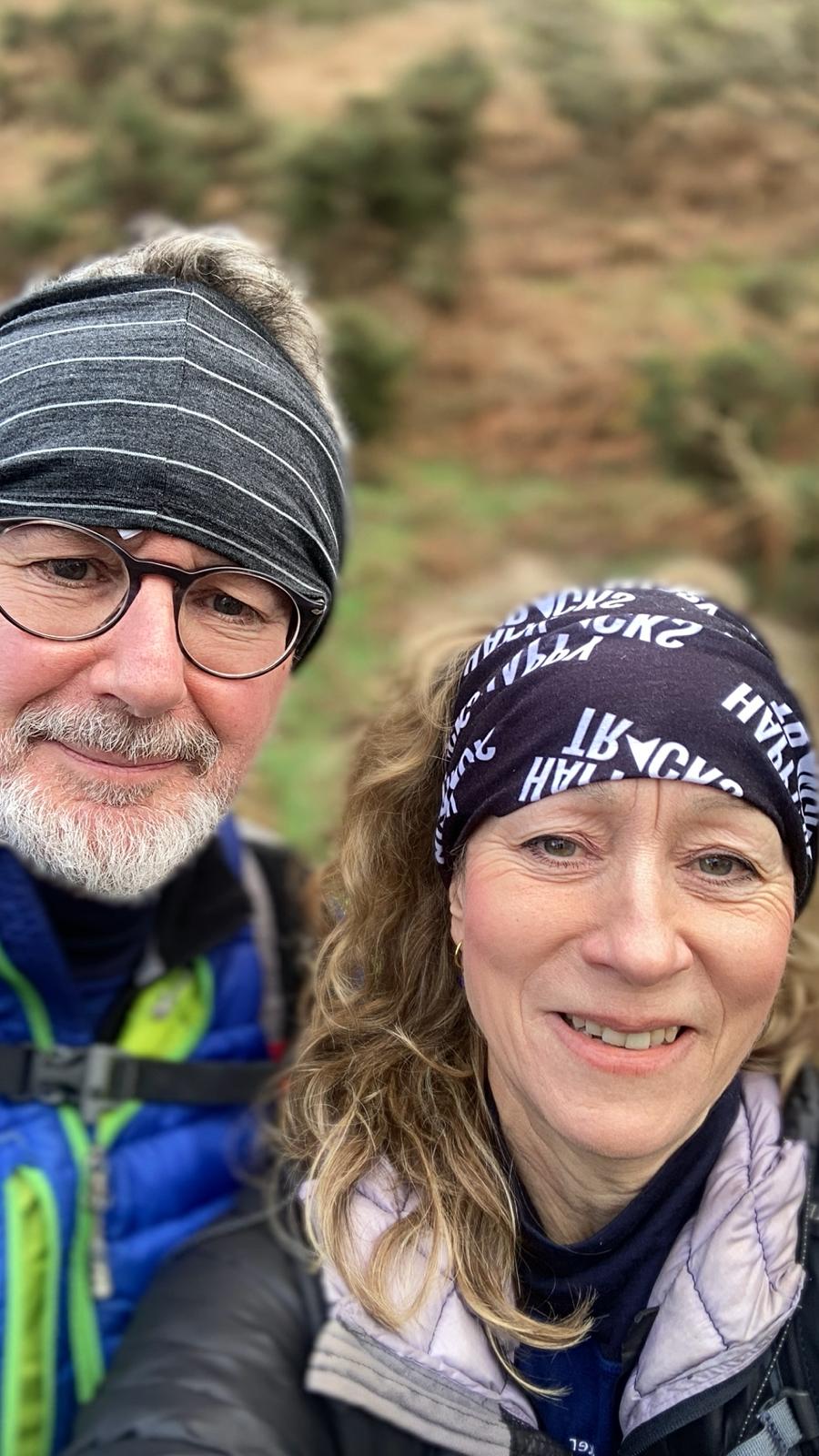
We caught up with Tim and Helen, a couple in their 60s training for the Haute Route. They hiked the Tour du Mont Blanc in 2019 and they ran marathons in their 40s and 50s. But over the past ten years, they’ve had a number of health issues that have knocked their confidence. Between them, they’ve had spinal surgery, two heart attacks, and skin cancer. After a series of setbacks, it can be easy to feel as though your world is shrinking. But last year, Tim and Helen chose to set themselves a new challenge (their biggest one yet!) – and continue following their ambitious dreams.
In our conversation, Tim and Helen described the obstacles that have got in the way of their training. They also shared their worries, plus a few tips that have helped them stay motivated. By writing up their story, we hope to inspire anyone else whose training isn’t going the way they’d hoped. We want to show that progress is always possible, even when life keeps getting in the way.
The Plan : What we recommend
The Walker’s Haute Route is one of Europe’s most demanding long-distance hikes. Stretching from Chamonix to Zermatt, the trail crosses high mountain passes and covers significant daily distances. On a typical day, hikers cover 15-18 km (9-11 miles), with 1,000-1,200 metres of ascent. Most people spend around 6 – 8 hours on their feet each day. For more information on the Haute Route, visit on our main page here.
These figures put the challenge into perspective. Because the Haute Route is so demanding, it requires a high level of fitness, endurance and determination. To prepare, we generally recommend the following:
- Regular cardio exercise, such as swimming, running or cycling. Aim for two to three hours per week.
- One weekly endurance hike, ideally around eleven miles (eighteen km) and six hours in duration, with as much ascent as you can reasonably find. A target of 1,000 metres of ascent is ideal.
- One or two strength training sessions per week, focusing on exercises such as step-ups, lunges, squats, incline treadmill walking, or using a gym stair machine.
If you can roughly follow this plan for several months, you’ll give yourself a solid foundation for the Haute Route. Don’t worry if you miss a few sessions from time to time. Consistency over many weeks is more important than completing every session perfectly.
The Reality of Training for the Haute Route
On 29th June 2026, Tim and Helen will set off on the Walker’s Haute Route. They booked their tour in January, and their plan was to gradually work on their cardio fitness and endurance.
The reality, however, has been different. Helen works long, intense shifts, making it difficult to maintain a consistent routine. Meanwhile, Tim has been juggling a series of short-term contracts while preparing for a major change: moving out of the house they’ve lived in for more than twenty years. With the move scheduled for August, much of their spare time has been spent sorting, packing and organising.
Their story will sound familiar to many people. Training plans often assume unlimited time, easy access to hills and a predictable schedule. Real life rarely cooperates. So, with just a few weeks to go, do Helen and Tim feel ready? What have they managed to get done, and how have they fitted their training around their busy, everyday life?
A typical week of Training
Although she doesn’t feel completely satisfied, Helen has managed to stick to her plan of gradually building her cardio fitness. Tim has been struggling more to work on his cardio, as he got a shoulder injury in February. They haven’t been able to do many long hikes with lots of climbing. Here’s a rough overview of their training weeks, month-by-month :
Helen’s training for the Haute Route
January : running three to five miles twice a week, plus one hour of badminton. Walking four miles at the weekend.
February – April : running three to five miles three times a week, with seven to fourteen miles at the weekend.
April – May : running three to five miles three times a week, with seven to fourteen miles at the weekend. She completed a half-marathon in April, and has been walking around 10 miles at the weekends.
For strength training, Helen has done some yoga classes, plus a few conditioning classes. We asked if she’d considered using a step-up machine at her gym, and she told us :
We live in a very tall house! I go up and down three flights of stairs about five times a day! So I did once try the step machine and, to be honest, I didn’t feel anything! But I get out of breath every time I go upstairs in my house…
Tim’s training for the Haute Route
January : swimming one mile of breaststroke three times a week, plus one hour of badminton. Walking four miles at the weekend.
February – April : Tim injured his shoulder so had to stop swimming! Instead, he started running three miles once a week, and he continued to play one hour of badminton. He’s been walking for a two to three hours at the weekend.
April – May : running three miles twice a week, plus one hour of badminton. With Helen, he’s done a few longer hikes of around ten miles.
While their preparation may not have been perfect, Tim and Helen have still built a solid foundation. Combined with a positive attitude, determination and a willingness to adapt, we hope it will be enough to carry them all the way to Zermatt.
I’m aware that I haven’t really done enough training for the Haute Route, and that is a bit stressful!
– Tim
The Biggest Challenges to Training for the Haute Route
When we asked Helen and Tim about their biggest challenges, their answers didn’t surprise us. These reflect the common worries that people have when training for the Haute Route, reminding us that successful preparation is rarely about following a perfect training plan. Instead, it’s about making the most of the time and opportunities that we do have…
1. Living Somewhere Flat
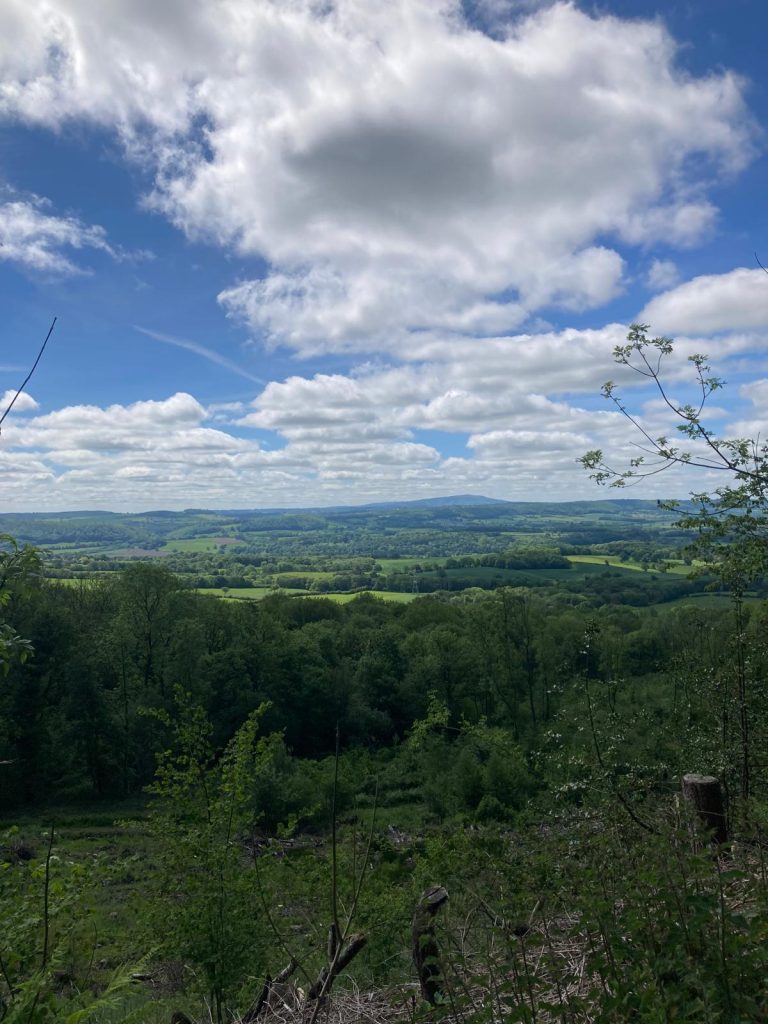
Tim and Helen live in England, near the Shropshire Hills. Their local landscape is rolling countryside rather than long mountain climbs.
The pole thing concerns me! I’m too proud to practice with poles on a normal walk… We don’t have many walks where they are actually needed, so I’m not getting any practice with them!
– Tim
They’ve tackled local favourites such as Clee Hill and The Wrekin, but have been surprised to discover that many of the walks they’d planned involved less ascent than they expected. For example, Clee Hill was only 350 metres of ascent, with around 12 miles distance.
We hiked what was supposed to be the highest peak in Shropshire, and actually it was just a little plod. We parked and it was like, where’s the bit where we’re going to start going up! A lot of the hikes that we’ve done, once we get there, we really didn’t find them challenging at all.
– Helen
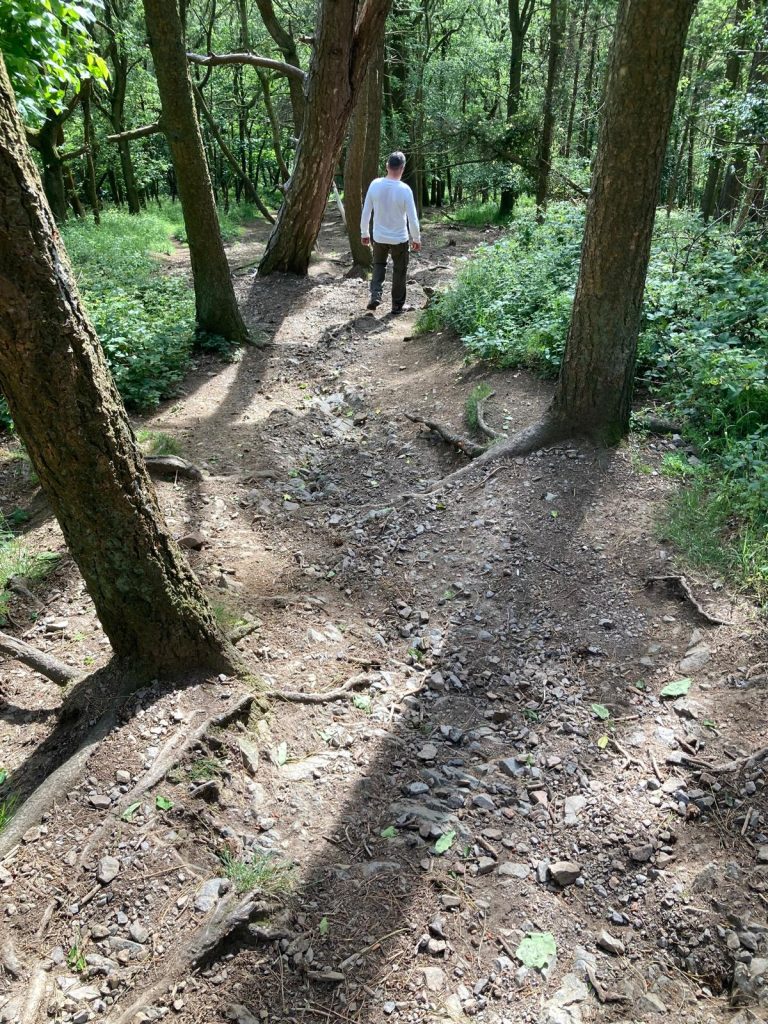
In these final weeks of training for the Haute Route, Tim and Helen are changing tack. Rather than seeking new routes, they’re focusing on one steep hill (The Wrekin) and using it for hill repeats.
Our advise On living somewhere flat
If you don’t have mountains on your doorstep, don’t worry. Many successful Haute Route hikers train in flat parts of the world. The key is to be deliberate with your preparation.
- Prioritise strength training. If time is limited, consider replacing some cardio sessions with strength work.
- Choose your walks carefully. Use a route-planning app such as Outdooractive or invest in a good local guidebook. Look for routes that maximise ascent, even if they aren’t particularly long.
- Repeat hills. If you struggle to find enough elevation, don’t be afraid to walk up and down the same hill several times. It’s not glamorous, but it’s an effective way to build climbing strength, and you can practice with your poles too (if you intent to use them).
- Train with your backpack. Once your fitness base is established, complete some longer walks carrying the pack you intend to use on the Haute Route.
The key is to focus on consistency rather than perfection. Regular walking, strength work and cardio training over several months will prepare you far better than a few heroic weekends in the hills.
2. Working Full-Time
Work has been one of the biggest obstacles. Helen works long shifts at a school, while Tim’s schedule is dictated by a series of short-term contracts. On top of that, they’re due to move house in August so most of their free time has been spent preparing for that.
Unless I go out first thing in the morning, I find that, by the time I come home, I’m too exhausted. Like yesterday, I got back at 4pm and I thought, well, that’s the ideal! I intended to put on my trainers and go, but I was so exhausted. I just poured myself a glass of wine and looked at my phone!
– Helen
It’s a challenge that many hikers will recognise. Sometimes the biggest obstacle isn’t finding the time to train, but finding the energy after a long day at work.

Our advice for full-time workers
It’s hard to balance a busy job with training for the Haute Route. Many hikers have to fit their preparation around work and other commitments. Here is some advice :
- Identify when you’re most likely to feel motivated to do you cardio (for example, Helen is more motivated in the mornings, before work)
- Prioritise consistency over perfection. A 30-minute workout that happens is better than a 90-minute workout that never gets done.
- Protect your weekend hikes. If you can only do one thing each week, make it a longer walk. Time on your feet is one of the best ways to prepare for the Haute Route.
- Accept that some weeks will be better than others. Missing a few sessions won’t ruin your preparation. Focus on maintaining good habits over several months rather than worrying about individual weeks.
3. Not Having a Clear Program
This is the biggest thing that Helen feels has affected her training. She is used to training for road marathons, and missed having this kind of clear program.
I would have loved a program, you know, which told us what we should be doing each week, and how much climbing we should be aiming for.
– Helen
For Helen, if they’d had a weekly training plan, which built up mileage and elevation gain over the course of a few months, this would have motivated her and she could have been more organised with her long-term plans. She also believes that she’d have felt more in control, as when training sessions started to slip, she could have just tagged them onto the following week.
Our thoughts on fixed training programs
While Helen felt that not having a fixed training plan was a disadvantage, we don’t necessarily see this as a problem. For many working people, a flexible approach is often more realistic and sustainable than trying to follow a rigid schedule.
If you feel like Helen, a simple solution is to use our training recommendations (above) as weekly targets. Schedule these into a calendar app once your work rota is confirmed. This creates flexibility while ensuring the important sessions still get done.
The Doubts That Remain
As departure day approaches, it’s natural to focus on what hasn’t gone to plan. Even if it hasn’t been “perfect”, Tim and Helen have spent months training for the Haute Route. Despite this, they still have two big concerns…
1. Health Issues
For Tim and Helen, training for the Haute Route isn’t just about fitness. It’s also about rebuilding confidence after a series of health setbacks. Tim had two heart attacks in his early 50s, and since then has been gradually getting back into cardio fitness as he learns what he can and cannot do…
I had a coupe of stents fitted and was prescribed medication. My cardiologist then told me that my heart issues need not hold me back, and that I’m “fixed”. I’ve taken that advice at face-value and generally don’t worry, unless I feel a pain in my chest… When that happens, unsurprisingly it knocks my confidence! But these pains have always turned out to be muscle pains.
– Tim
Helen had spinal surgery around five years ago, and although she now feels confident running and hiking, she’s worried about carrying a heavy backpack. This has been a concern from the beginning, but she’s now feeling much more reassured. In recent weeks, she’s been practising on shorter hikes with all the equipment she plans to carry on the Haute Route and has found the weight manageable. She’ll also be using trekking poles for additional support and stability on the trail. While she’s not using a luggage transfer service, Helen has packed as lightly as possible, carefully choosing only the essentials and keeping her backpack weight to a minimum.
2. Have we done enough?!
Both remain concerned about the amount of hill training they’ve managed to fit in, particularly given the long ascents and descents that await on the Haute Route. As Helen puts it,
Have I done enough? I suppose I’ll have had to have done enough!
Tim shares similar doubts. Reflecting on a recent training walk of 21 miles with 1,300 metres of ascent, he said,
Today, the morning after yesterday’s big walk, my legs are tired and it’s intimidating to have to ask, ‘Could I do it all over again?'”
It’s a question that many multi-day hikers will recognise, but ultimately one that can only be answered by jumping feet first onto the trail.
The Final Push
With departure day approaching, Tim and Helen are at the end of their training for the Haute Route. Like many hikers, they’ve been tempted to squeeze in a few extra long hikes, but they’re also worried about injuring themselves from doing too much, too late.
With this it feels like, oh god, we haven’t really done the training so perhaps we should keep going until the last moment. There’s a nervousness there… Because that’s obviously not what we should be doing!
– Helen
Helen asked whether they should “taper” before their tour in the same way that marathon runners taper before a race. Our answer is yes; in the final one to two weeks before the Haute Route, or any long-distance hike, the goal is to maintain fitness while allowing the body to recover. Rather than adding extra sessions, it’s better to reduce the volume by keeping walks short and easy.
Last minute preparations
Before setting off, Tim and Helen will do a few small hikes with their full packs. This is a particular concern for Helen, who wants to make sure she’s comfortable carrying the weight day after day in the mountains.
I want to work out if my rucksack will feel too heavy, and if everything’s in the right place. You know, like I’ve just put my Crocs on the back of my bag, so are they going to rattle around and irritate me; can I reach my water when I need it, that kind of thing.
– Helen
Because they’re hiking the Haute Route self-guided, they’re also taking time to study the route in detail. Knowing each day’s itinerary and getting excited about the highlights ahead boosts their motivation and helps them feel mentally prepared.
Final Thoughts on Training for the Haute Route
When we asked what advice they would give to other hikers, Helen’s answer was simple:
Go for it! You’re never too old! And don’t let a few missed training sessions hold you back!
Perhaps that’s the biggest lesson from their experience. Training for the Haute Route is rarely perfect, but consistency, determination and a positive attitude can take you a long way. Tim had a very similar message…
I worry about our training, but anyone who’s done any endurance challenge learns that your mind caters for these things and calibrates according to what you’re trying to do.
While good preparation is important, there comes a point where you have to trust the work you’ve done, make the most of the fitness you have, and remember that determination can carry you further than you think.
We wish Tim and Helen every success on their journey to Zermatt! Stay tuned to hear all about it in a follow-up article.
The hikers Newsletter
Get trekking info and our latest deals.
