

The Ultimate Guide to the Tour du Mont Blanc (TMB)
170km
(105 miles) of trails
10,000m
vertical ascent
3
countries
In this definitive guide to the Tour du Mont Blanc (TMB), we’ll summarise the key facts, describe the itinerary, and we’ll explain what makes the route so special. As local guides and mountain-enthusiasts, we know the TMB trails like the back of our hands, and we love the surrounding peaks, ridges and glaciers. We’re sharing this information to help fellow hikers stay safe and prepare for upcoming adventures. Read on to find out everything you need to know about the Tour du Mont Blanc!
Why the Tour du Mont Blanc is so popular
Once you consider the facts, it’s clear why the Tour du Mont Blanc has become so popular. Over 10 days, hikers cover a distance of 170 kilometres (105 miles), with around 10,000 metres (32,800ft) of vertical ascent. This is a serious feat that requires training, but it’s also achievable to most people. It’s big without being overwhelming, which makes it the perfect introduction to long-distance hiking. We think of the Tour du Mont Blanc as the Goldilocks of hikes : not too easy, not too brutal… just right.
But it’s not just the achievability of the challenge that makes the Tour du Mont Blanc so attractive. Just one glance at the itinerary (detailed below), and you’re drawn in. The route circles around Mont Blanc – the highest peak in Western Europe – revealing a different side in each country : glacier-clad and dramatic in France, broad and sunlit in Italy, and a sweeping skyline of snowy domes from Switzerland. Despite being an adventurous and sometimes remote-feeling route, the TMB itinerary is supported by a network of quality mountain refuges, as well as reliable cable cars and public transport. Because of this, you’re always close to “civilization”, and so it’s easy to shorten or even skip days if you run into trouble.
Just as the views of Mont Blanc keep changing, so does the landscape along the Tour du Mont Blanc. The trail is a constant up-and-down roller-coaster : you’ll typically start the day in a lush valley, climb through shady forest and flower-filled meadows, then crest a rocky mountain pass before dropping down the other side. Each shift in altitude brings a new cast of plants and animals, all perfectly tuned to their unique environment.
And because the trail crosses three countries, the culture changes as often as the scenery. In France you’ll hear cheerful “bonjours” and refuel on crusty bread and local cheese; in Italy it’s “buongiorno” and steaming plates of pasta; and in Switzerland you’ll find tidy alpine villages, multilingual greetings, and hearty portions of rostï and cheesy fondu. Few long-distance hikes offer such a satisfying mix of landscapes, culture and cuisine.
TMB Logistics: The Practical Essentials
- Chamonix : Your Base camp
Most hikers start their tour from the Chamonix valley, which is easily accessible via Geneva Airport (read how to get to Chamonix from Geneva in this article). The Chamonix valley is around 18 kilometres (11 miles) long, and is made up of several smaller towns and villages. Chamonix has excellent public transport, meaning you can stay in any of these other locations without problem. The actual hike starts from Les Houches, which sits at the Western end of the valley (closest to Geneva).
- TMB Backpack size : Pack light, enjoy more!
You don’t need a huge, heavy bag to hike the Tour du Mont Blanc. A medium-sized backpack, lightweight clothing, and just the essentials are more than enough for most hikers. Many hotels and mountain refuges along the route offer laundry services too, especially if you arrive early enough to book a slot. If you’re wondering about the ideal TMB backpack size, take a look at our complete packing list. - Tour du Mont Blanc luggage transfer : Day pack only!
Can’t decide what not to bring? Book a Tour du Mont Blanc luggage transfer! Simply pack your bulky items (spare clothes, evening comforts, extra snacks) in a large bag, and hike with a small day pack. Your large bag will be transferred to the next stop, so you’ll just need to carry a lightweight day pack. For a full breakdown of what to put in your day pack, see our complete packing list. - Tour du Mont Blanc accommodation : Book early!
Tour du Mont Blanc accommodation fills up quickly, especially the mountain refuges. Whether you want the communal atmosphere of a traditional refuge or the privacy of a “Comfort” tour, make sure to book early. The TMB is one of the most popular long-distance hikes in the world! For more information about mountain refuges, read this article.

TMB the hiking route: a day-by-day description
Each day is around 15 – 20 kilometers (12 miles), with 1000 meters of ascent. The highest point of the TMB is at 2665m above sea level. For a description of a typical TMB day, read this post.
Day 1 Your adventure begins
Les Houches > Les Contamines
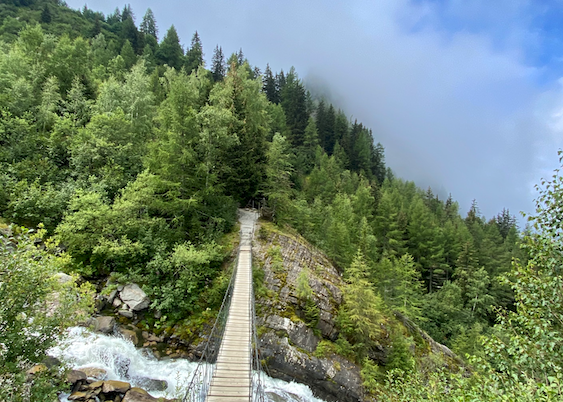
Meet your guide, for Comfort hikers this will be 8:30am at Hotel Plan B in Chamonix, for Classic hikers this is at 9am at the TMB Arch in Les Houches. You’ll then ride the Bellevue cable car and traverse alpine meadows towards the Bionnassay Glacier. Here you’ll see a glacial torrent, which you’ll cross via an exhilarating suspension bridge. From there, you’ll climb to Col du Tricot, then descend to the Miage Chalets. This is a great place to stop for a snack. One final climb brings you to the second pass of the days, and then easy trails lead you through meadows and forests down to Les Contamines. Comfort hikers may take a short transfer to their hotel.
This day covers 14km, with 700m of climbing.
Day 2 On ancient paths
Les Contamines > Les Chapieux
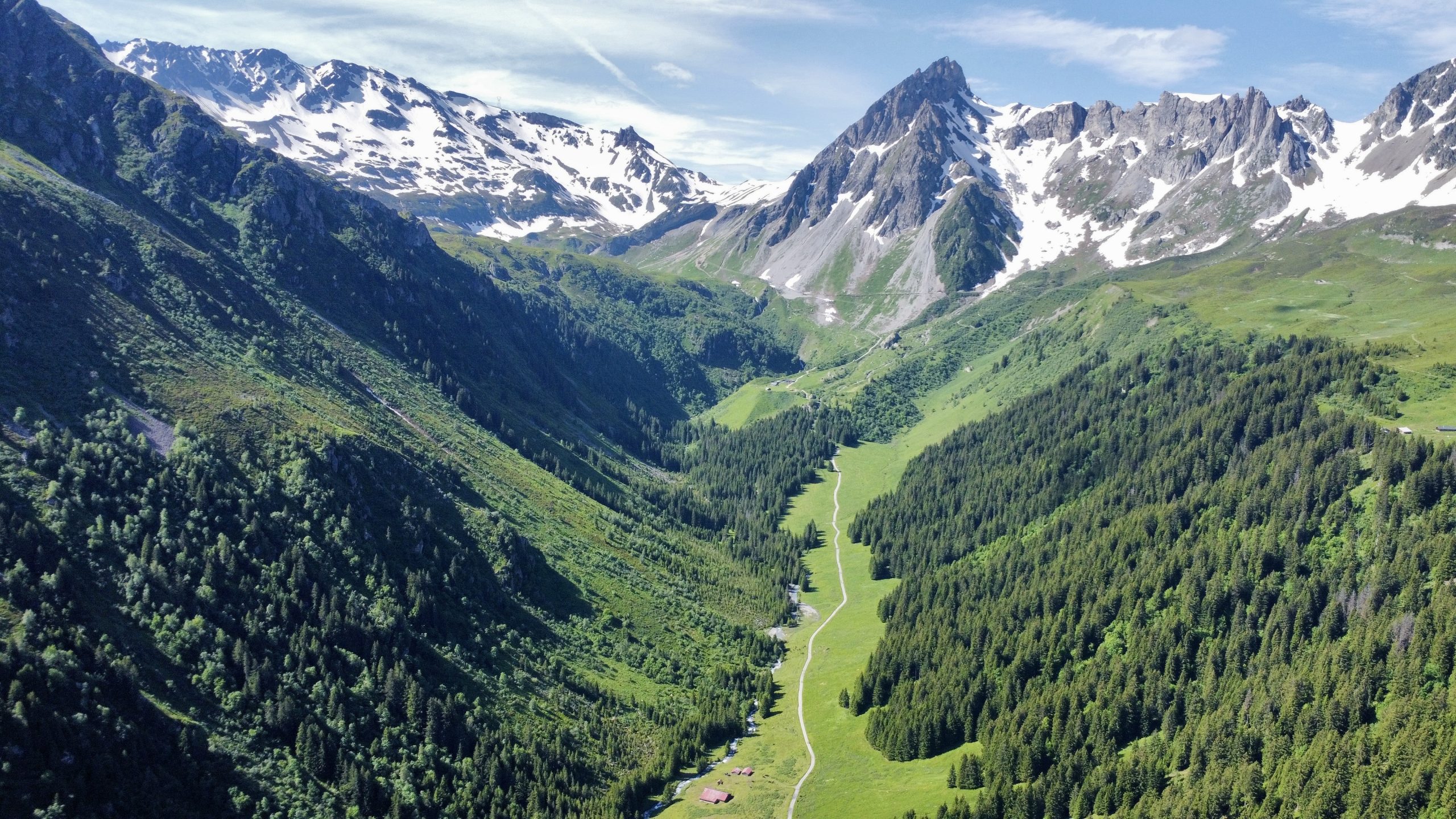
An easy river path will lead you past a historic church and onto a Roman road. You’ll ascend up to Col du Bonhomme, and as you climb the trail will become more technical. From the pass, you’ll continue up to Col des Fours, which is one of the highest points of the TMB. A steep descent leads back to easy trails, and you’ll join a farm track down to Refuge des Mottets. Alternatively you’ll take a short taxi to Bourg St Maurice from the village of Les Chapieux to access hotel accommodation.
This day covers 20km, with 1400m of climbing.
Day 3 Welcome to Italy
Les Chapieux > Val Veny
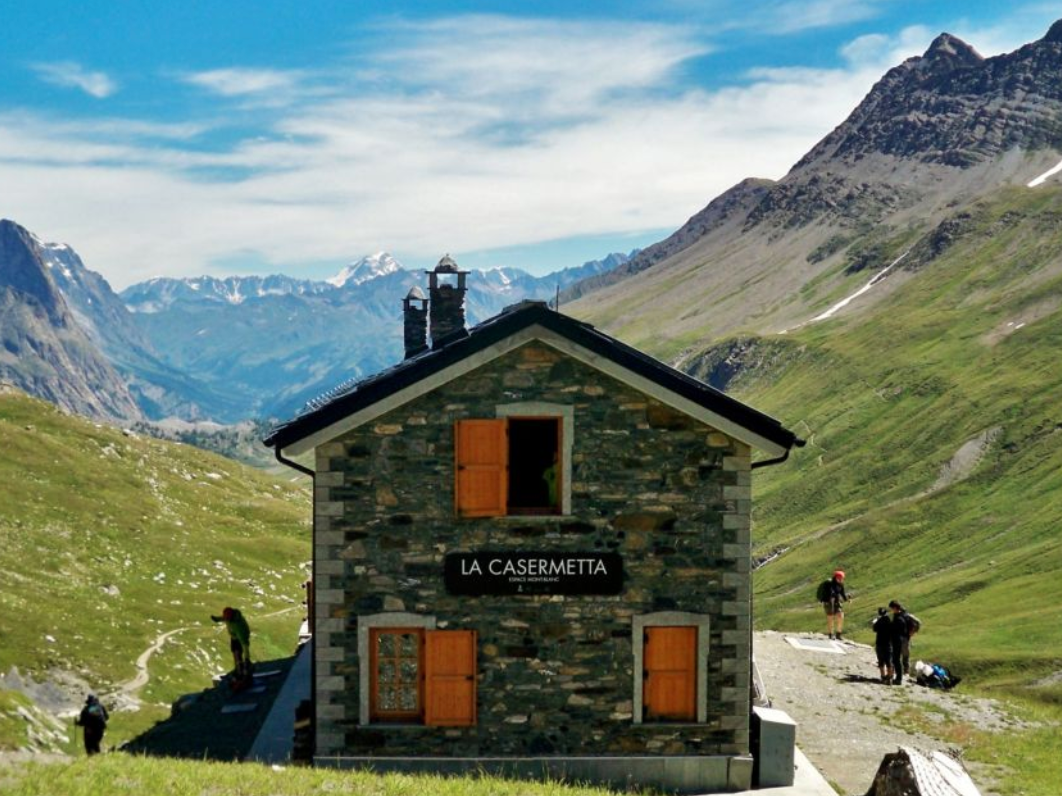
A gradual climb will bring you to Col de la Seigne, where you’ll cross into Italy. The views from here are incredible! You’ll see Mont Blanc’s west face, Himalayan in scale, and you’ll see down into å. A gentle descent takes you past a remote mountain museum, which is well-worth a visit, then past Rifugio Elisabetta. Listen out for marmots above Elisabetta; their distinctive calls tend to fill the whole valley! After sampling some local dishes, continue down through the forest to Rifugio Monte Bianco or Rifugio Maison Vielle. On the Comfort tour this is one of your nights in shared accommodation in a real mountain refuge.
This day covers 17km, with 720m of climbing.
Day 4 Italian food and culture

Val Veny > Courmayeur
With three long days behind you, it’s time for an easier day. A steep climb through forest will bring you to the Courmayeur ski resort and a little refuge. After stopping for a snack, you can either take the cable car down to Courmayeur, or continue on foot. If you choose to hike, the highlight of this descent is passing through Dolonne. This charming village, with its quiet, modest streets, feels authentically Italian. Spend the afternoon exploring the bustling, historic town of Courmayeur.
This day covers 8km, with 300m of climbing.
Day 5 The balcony trail
Courmayeur > Val Ferret
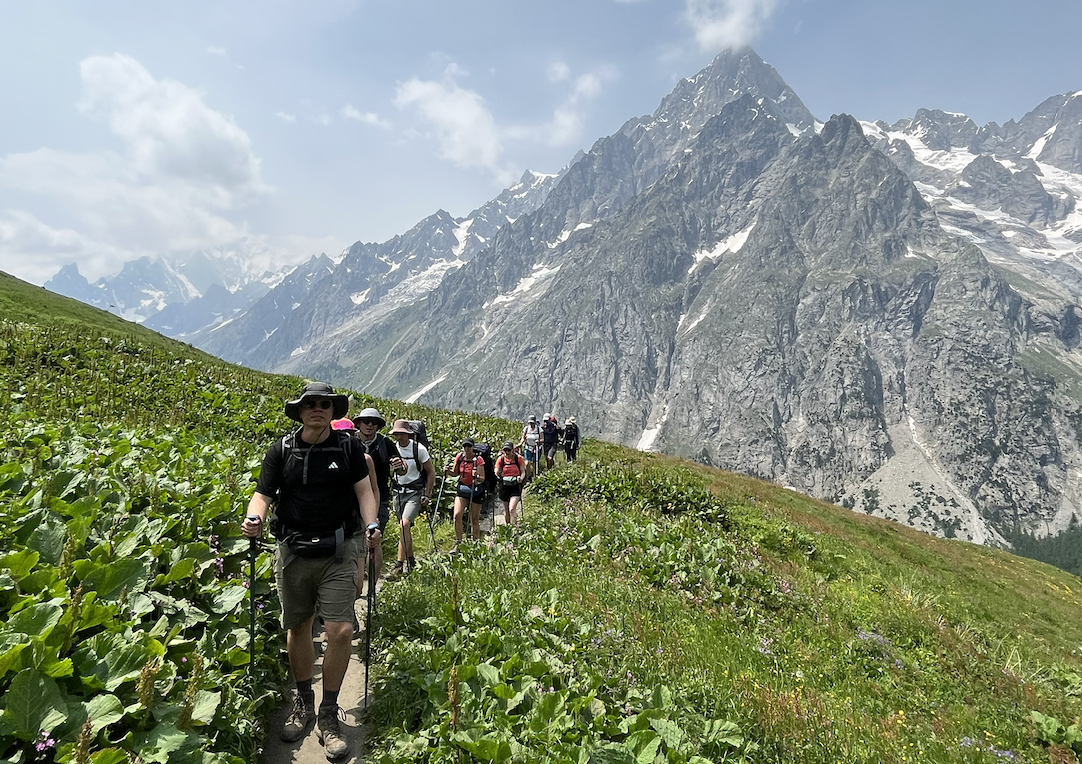
After a strenuous start up to Rifugio Bertone, you’ll join the famous balcony trail. This undulating trail is so smooth that you can look up from your feet. Thickets of fragrant alpenrose colour the slopes, and you’ll get a clear view of the Mont Blanc massif. From this viewpoint, the scale of Mont Blanc’s hanging glaciers and towers is striking! One final climb will bring you to Rifugio Bonatti, where you’ll spend the night. Alternatively, if you’re a Comfort Tour guest, you’ll head back to Courmayeur.
This day covers 18km, with 1100m of climbing.
Day 6 Into Switzerland!
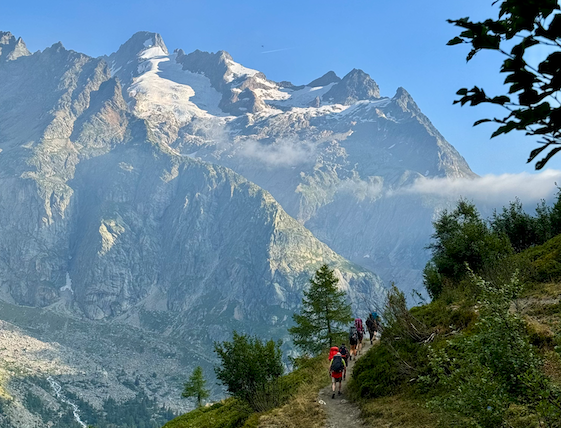
Val Ferret > La Fouly
You’ll continue along the balcony trail before dropping down to a refuge, where you can enjoy your last Italian coffee. Now you’ll begin the steep climb to Grand Col Ferret, which is the highest point of the classic route and marks the Italian-Swiss border. The trail climbs in strenuous zigzags, but it is not technical, and when you reach the top you’ll be rewarded with a fantastic view of the Grand Jorasses. The second half of the day is gentle; smooth trails lead you down through meadows to the sleepy village of La Fouly.
This day covers 20km, with 850m of climbing.
Day 7 Discover Pure Swissness
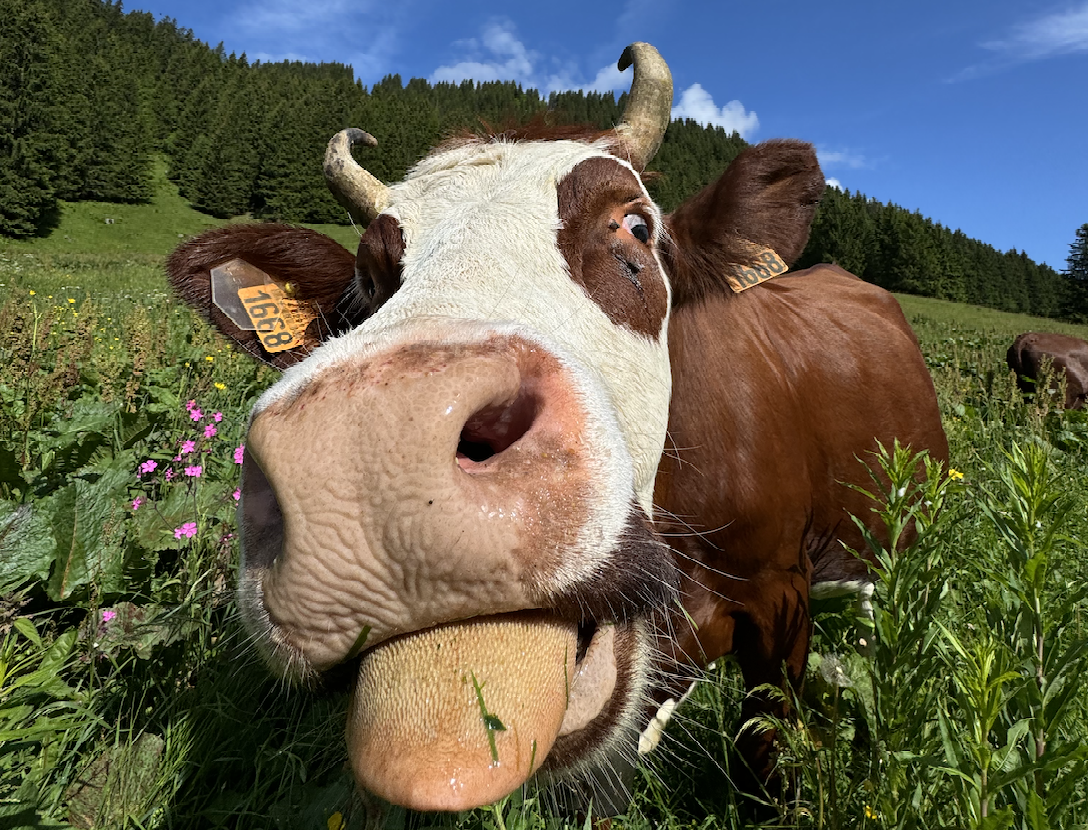
La Fouly > Champex Lac
This is the easiest day of the TMB. You won’t cross any mountain passes, and the trails are smooth. A pleasant valley walk through colourful meadows and dense forest will lead you to the lake-side town of Champex. Along the way, you’ll pass old farming communities and hamlets. By late lunch, you’ll have reachedyour accommodation. Spend the afternoon exploring the town; go find an ice cream, then enjoy the lake by taking a swim or renting a paddle-board. Alternatively, you might like to explore the botanical gardens or just kick back and relax on the terrace with a cold drink.
This day covers 16km, with 520m of climbing.
Day 8 Alpine Meadows & Pink Church
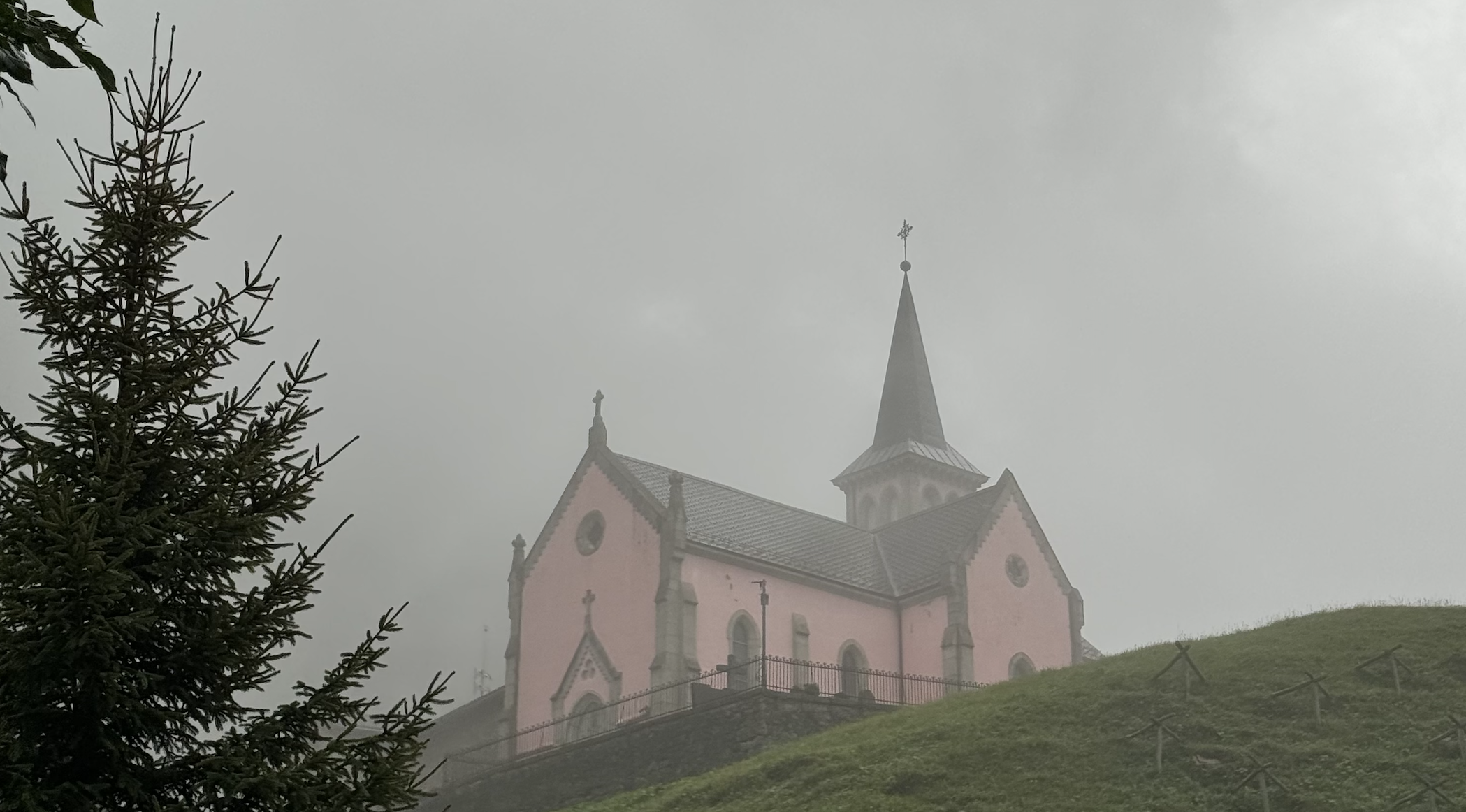
Champex Lac > Trient
Stroll along quiet roads out of Champex, passing meadows and colourful chalets. You’ll then enter the forest and ascend the hillside steeply. The climb is challenging, but you’ll be in the shade for most of the way. Eventually the gradient eases, and you’ll reach a wide, open pasture full of cows. Treat yourself to a home-made tart or cake at the “buvette”, and enjoy the views of vineyards below. When you’re ready, continue on an undulating trail across the hillside, then drop down to Trient through the forest.
This day covers 16km, with 850m of climbing.
Day 9 Views of Mont Blanc
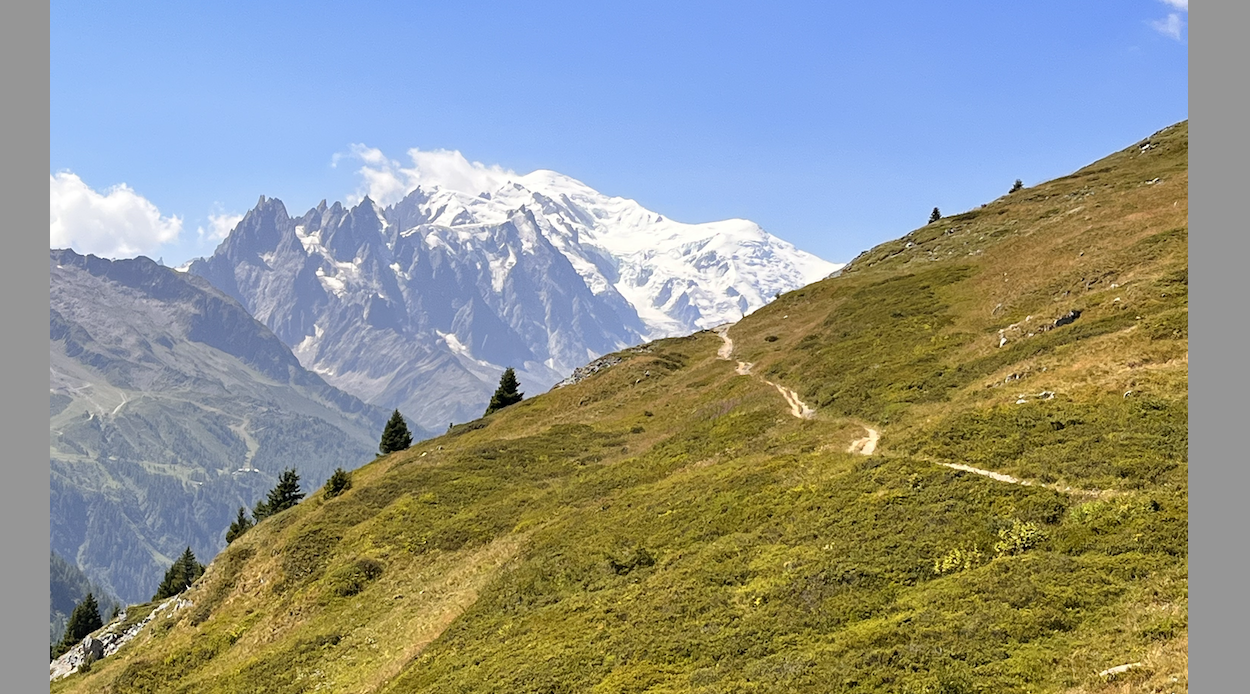
Trient > Tré-Le-Champ
This penultimate day of the TMB brings you back to France. You’ll start by zig-zagging up the cool, north-facing forests of Trient, before coming out into high alpine pastures. A huge flock of sheep often graze here, and sometimes you’ll see the shepherd with his dog, whistling commands. A gentle traverse will lead you to Col de Balme. From here, you’ll descend to either Montroc or Vallorcine. If you’re joining a Classic Tour, you’ll stay in one of these this picturesque mountain hamlets. Comfort Tour hikers will continue down to the town of Argentière.
This day covers 16km, with 1150m of climbing.
Day 10 The Home Stretch!
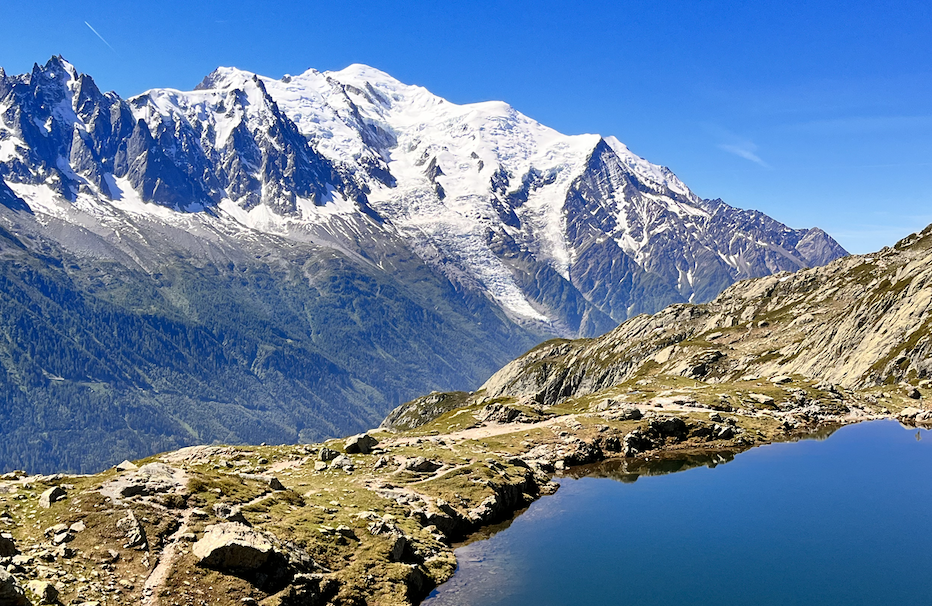
Tré-Le-Champ > Chamonix
The last day of the TMB is not one to miss! A steep but shady trail brings you to the crystal-clear Lac Blanc. If the group feels confident, you can reach the lake via a series of metal ladders. After enjoying the unbeatable views from Lac Blanc, you’ll traverse the hillside to a ski resort, and then descend to Chamonix. Alternatively, if you’d prefer a shorter day, you can follow the shady river trail from Tré-Le-Champ. You’ll arrive in Chamonix at around 4pm, where you can enjoy a final drink with your group to celebrate!
This day covers 16kms, with 1200m of climbing.
Get in touch for bookings or to organize your own private hike
Hiking the TMB with Happy Tracks – FAQ
The classic route is considered a difficult hike. This is because of the distance, the ascent, and terrain. It crosses several high mountain passes, and follows some technical, rocky trails. Hiking the TMB therefore requires a good level of fitness. That said, you don’t need specific experience in the mountains. It’s the perfect first multi-day hike for those with a good base level of fitness, and there is no mountaineering involved. You should be able to hike 15km with 1000m of ascent per day or ascend at a minimum speed of 300 metres per hour (with backpack) to complete this trek with a group.
Get prepared by doing some endurance training. Exercises like running, walking, cycling etc. are good. You do not need to be in the mountains to train, this can be done in the gym if needed. We do recommend some longer practice hikes before your trip to get used to walking with all your equipment. It is also important to get used to your hiking footwear. Try your kit out several times to make sure everything is comfortable. Get in touch if you have specific questions about training.
There are many alternatives, or so called “variants”, to the classic route. Some take steeper, more technical trails, which require a greater level of fitness. For example, the most difficult part of the TMB is the climb up to Fenêtre d’Arpette. However, this is a “variant” that most guided groups choose not to do. Other TMB variants take shorter, easier trails. If you join a guided TMB group, the exact route that you’ll take will depend on the fitness of your group, as well as the trail and weather conditions.
Luggage transfer would allow you to carry just a small day-bag while hiking. Our transfer partner will drive your bag safely to the next destination during the day. This service is available for 8 out of 9 nights. This is a good option if you want to carry bulkier clothing, or if you want a few extra items (such as a book or a laptop) in the evenings. To benefit from this service, pack your luggage into a soft bag. There aren’t any size restrictions, but the weight is limited to 15kg per bag. We cannot transport loose, single items or open bags (e.g. shopping bags), and you must protect fragile items to avoid damage.
You will stay in a mixture of mountain hotels and remote refuges. The hotels are fairly basic, and are located in quiet towns with just a few shops. For more information about mountain refuges, read this post. You will always have access to hot showers, running water, and electricity sockets which you can use to charge your devices. You will be provided with a blanket and a pillow, but you must bring a sleeping bag liner.
It is not possible to stay in just private accommodation on the classic TMB route. However, you can sleep in private rooms for 7 out of 9 nights on our Comfort Tour.
Free WiFi is available in most places, but it is often quite slow and unstable. There isn’t any WiFi at the mountain refuges.
There are lots of mountain refuges along the trail where you can buy snacks and small plates of warm food (e.g. an omelet and a blueberry tart). We will provide you with a new lunch pack at the start of each day. Our lunch packs include one large item (e.g. a sandwich or a quiche), plus several small snacks.
The choice at breakfast and dinner will vary depending on where you are on the TMB; there is more choice in the towns than in the mountain refuges. A typical refuge breakfast consists of bread, jam, fresh fruit, tea and coffee. At dinner, we are normally offered soup, followed by meat (e.g. chicken or beef), vegetables, carbohydrates (e.g. potatoes, pasta), and a dessert to finish (e.g. créme caramel, chocolate pudding). For more information on TMB food, read this article.
If you have a dietary requirement, it’s essential that you let us know in advance so that we can inform the accomodation.
We can accommodate the following :
- Nut allergies
- Vegetarian / vegan
- Coeliac / gluten-intolerant
If you have a more complicated dietary requirement, you might have to carry some of your own food for breakfasts and dinner.
We recommend carrying 2 – 3 litres of water each day (100floz). Bottles are fine, but a camel bag (water bladder) is more practical because you can drink while trekking. Every TMB refuge and hotel has free, drinkable tap water. On the trails, there are safe water fountains to fill up from. Your guide will advise you each day about where you can re-fill your water container.
The weather is becoming increasingly difficult to predict, with fewer patterns. That said, in general June and September are dry, cooler months, with temperatures at around 18°C (64°F). As the temperatures increase in July and August, we start to see more afternoon showers and thunderstorms. The TMB classic route crosses several high mountain passes, which can be windy, cold, and sometimes snowy. For more information about TMB weather, visit this post.
The classic TMB route crosses several mountain passes, and it follows some technical trails. It is considered a difficult trek, and the objective dangers should be taken seriously. Because of this, we strongly recommend getting insurance (travel, medical and mountain insurance). We will not accept responsibility for any costs that occur as a result of inadequate insurance. However, we can help you prepare by answering questions and giving advice – just get in touch!
France and Italy use Euros (EUR), and Switzerland uses Swiss Francs (CHF). You can withdraw cash in the bigger towns, and most shops and restaurants will accept card payments. When on the trail, it’s a good idea to carry a bit of cash in both Euros and Swiss Francs, as most mountain refuges do not accept card payments.
You can download our packing list here. If you strictly follow the packing list, you’ll be prepared for every situation and your backpack won’t get too heavy. Aim for no more than 10kg on your back, otherwise it will get tough! For tips and tricks about how to pack for the TMB, read this article.
We recommend using lightweight hiking boots (GoreTex, Leather or similar) which cover your ankles. Hiking boots prevent ankle injuries and are the most suitable footwear for crossing snow patches, which are fairly common. We recommend bringing a light pair of sneakers or sandals to use in the evenings.
Walking poles are not mandatory but we strongly recommend them. The uphills are easier and on the downhill you can take weight off your knees. Generally speaking, hiking poles prevent knee and ankle injuries. We know that traveling (especially by airplane) can be tricky with hiking poles in your luggage, that’s why we rent hiking poles to our clients on demand.
If you are feeling unwell / unable to complete a stage, you will have to rely on public or private transport to get to the next stage. Some stages are quite easy to “skip”, and others are more difficult. Your guide and the Happy Tracks team will assist you in finding a suitable solution. Please bear in mind that you will be responsible for paying any additional costs. If you cannot finish the tour, your guide and the Happy Tracks team will assist you in finding a suitable solution. For information on how to shorten a day on the TMB, read this article.
TMB Further Reading
As an experienced and local guiding company, we’ve built up an extensive catalog of Tour du Mont Blanc specific articles. Browse through the articles below, or jump down to our FAQ.
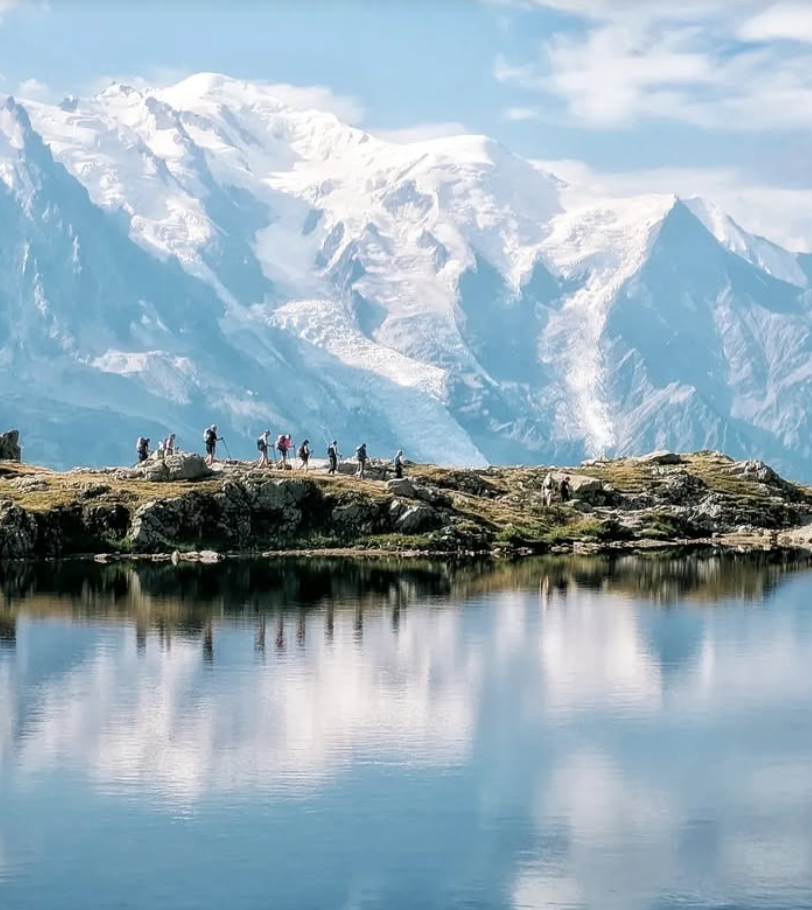
TMB Conditions August 2026 : peak summer!
August TMB conditions: hot, busy and dry, with trail updates, water advice and tips from our guides, including why setting off before sunrise can help.
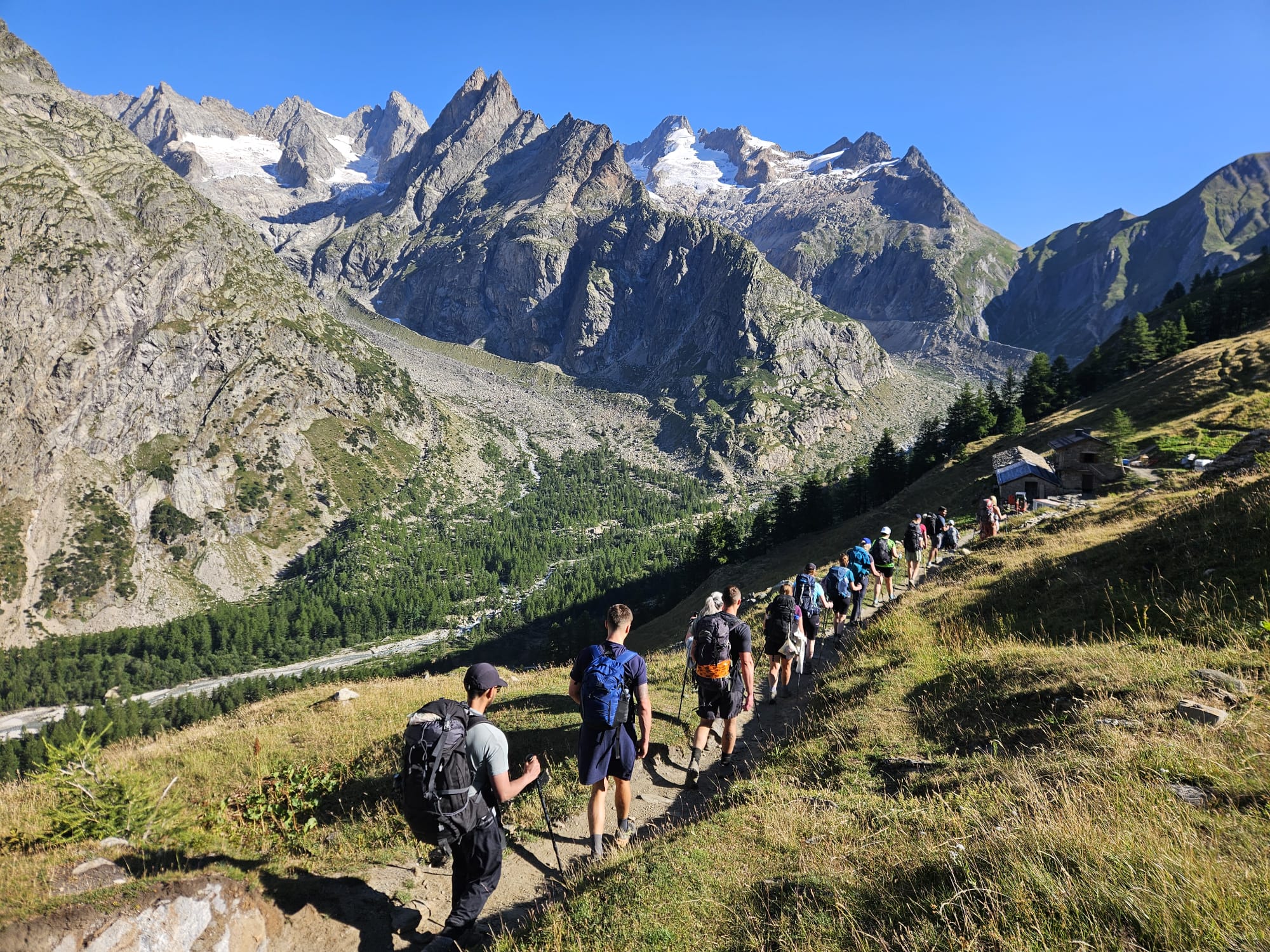
TMB Conditions July 2026 : Summer in full swing
Get the latest July 2026 TMB conditions, including snow, trail conditions, weather, water, and what to expect when hiking the Tour du Mont Blanc.
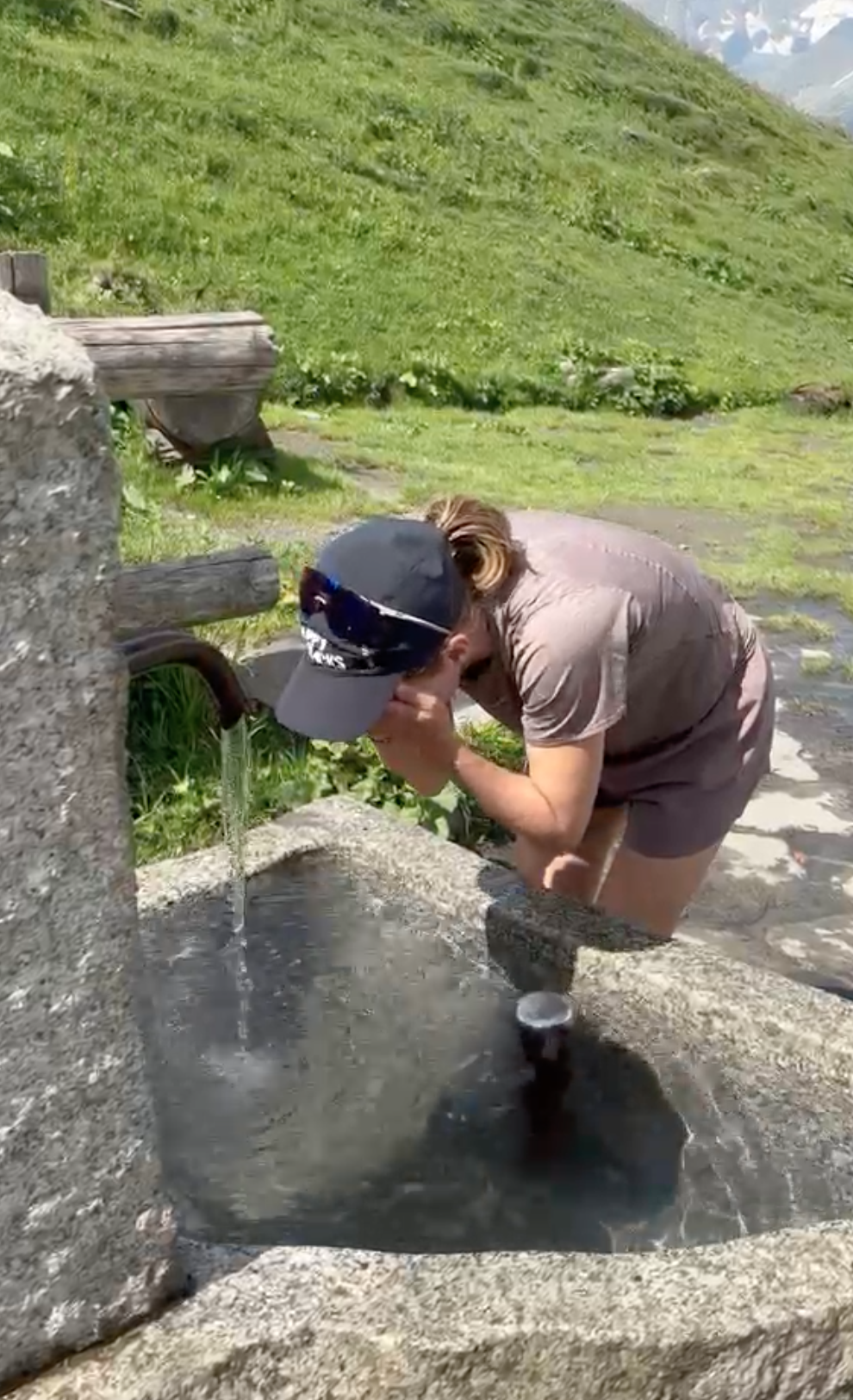
Hiking in heat : 5 simple ways to cool down
Hiking in the heat this summer? Read these 5 simple tips, from our hiking guides and backed by science!
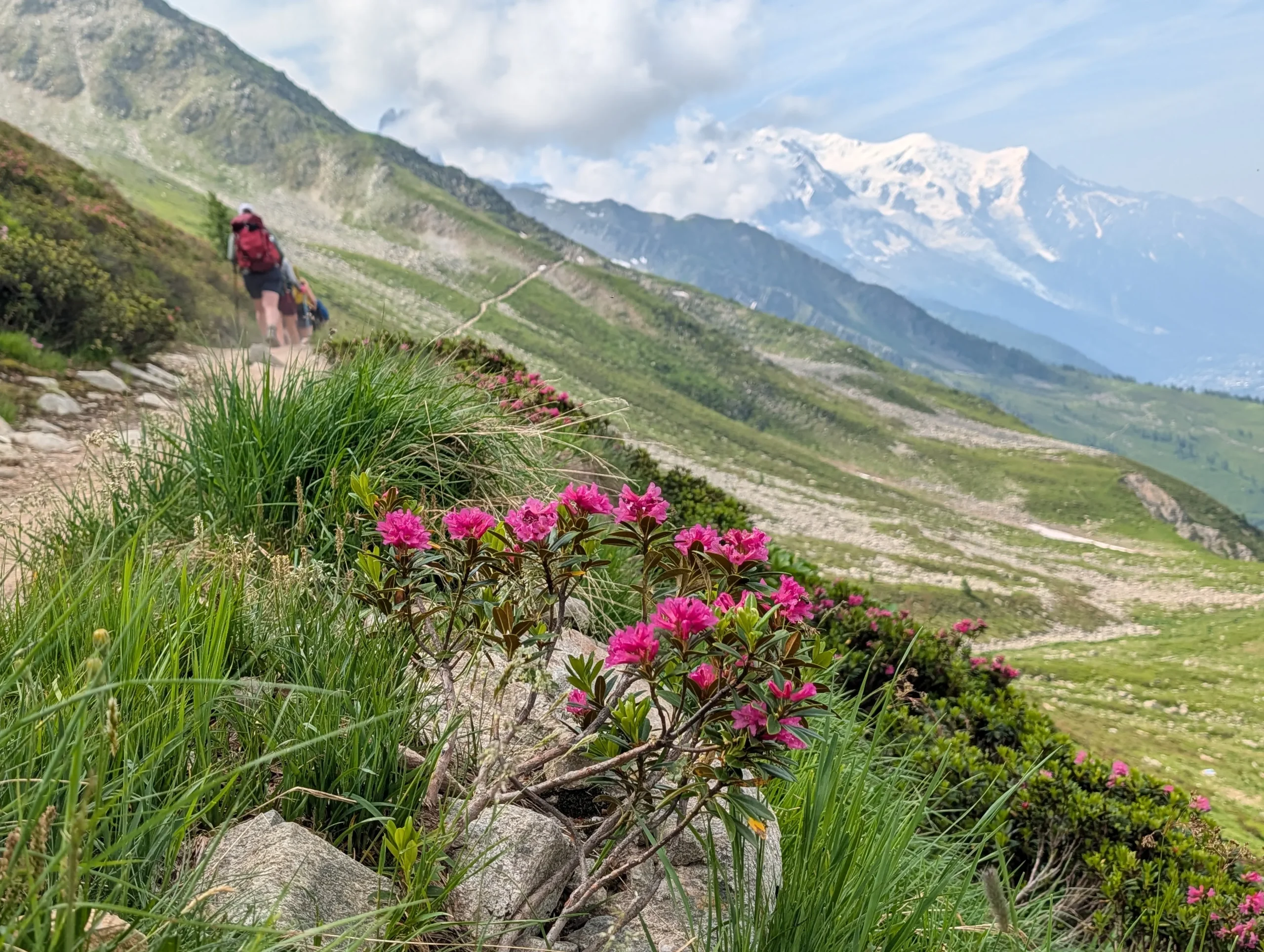
Look down! Early-season TMB flowers
For wildflowers, the Tour du Mont Blanc (TMB) can be thought of as four distinct worlds stacked on top of one another. Over a typical day, the TMB flowers change dramatically as you climb. From fragrant valley meadows buzzing with life, to wild, windswept passes. Here, only the toughest, most specialised flowers survive, nestled up…
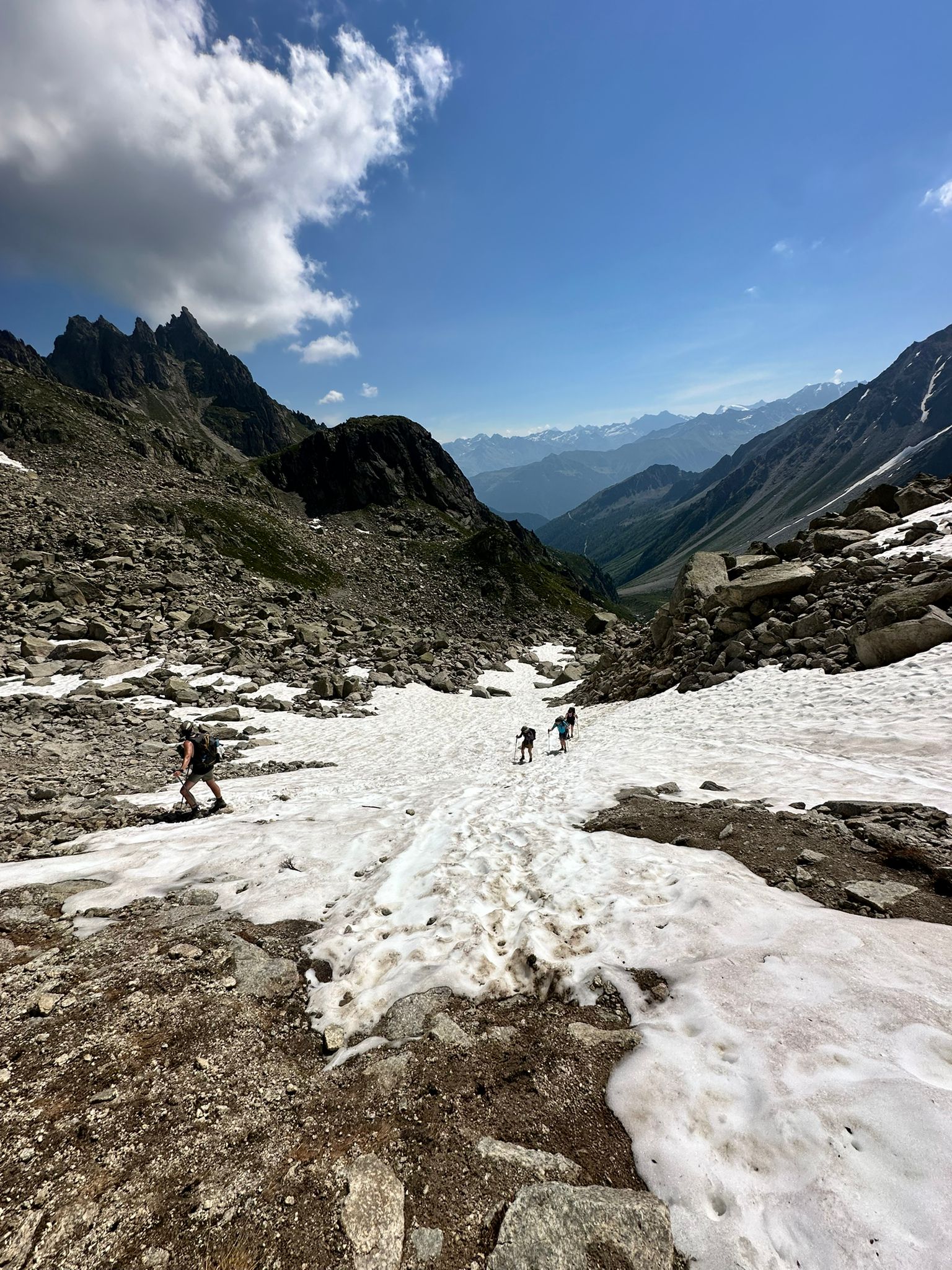
June 2026 TMB CondItions : The Great Melt Begins
A few of our TMB groups have already completed their tour, so it’s time to share our June TMB conditions report! You can read our May conditions report here, which includes a detailed overview of the winter season. If you’re hiking the Tour du Mont Blanc (TMB) in the coming weeks, now’s the perfect time…

Skip tmb days : how to get back on track
Need to skip a stage on the Tour du Mont Blanc? This guide explains how to skip TMB days using local buses, trains and taxis, helping you adapt your itinerary safely and get back on track when plans change.

May 2026 TMB Conditions – Eyes on high passes
It’s here! Our first TMB conditions report of 2026! Make sure to bookmark our main Trail Updates page so you can get more information next month! If you’re hiking the Tour du Mont Blanc (TMB) this year, now is the time to start monitoring the weather and keeping an eye on the snow conditions. Throughout…

TMB shortcuts: how to cut days and get going
Need to skip a stage on the Tour du Mont Blanc? This guide explains how to skip TMB days using local buses, trains and taxis, helping you adapt your itinerary safely and get back on track when plans change.

TMB Food : make it more than just a hike!
In this guide, we’ll detail which TMB food you should add to your must-try list! The Tour du Mont Blanc (TMB) offers far more than spectacular hiking. It’s also one of Europe’s most rewarding culinary journeys, especially because it passes through three distinct countries. For more information on the TMB itinerary, check out our information…

All women's Tour du Mont Blanc: a guided hiking circuit
This guided trek of the Tour du Mont Blanc (TMB) in summer 2027 is designed for women who want to experience the scale of the Alps within a supportive, grounded community. Want to join the trek? Prepare for your alpine hike with our practical guide written by us locals. The ultimate guide to the TMB…
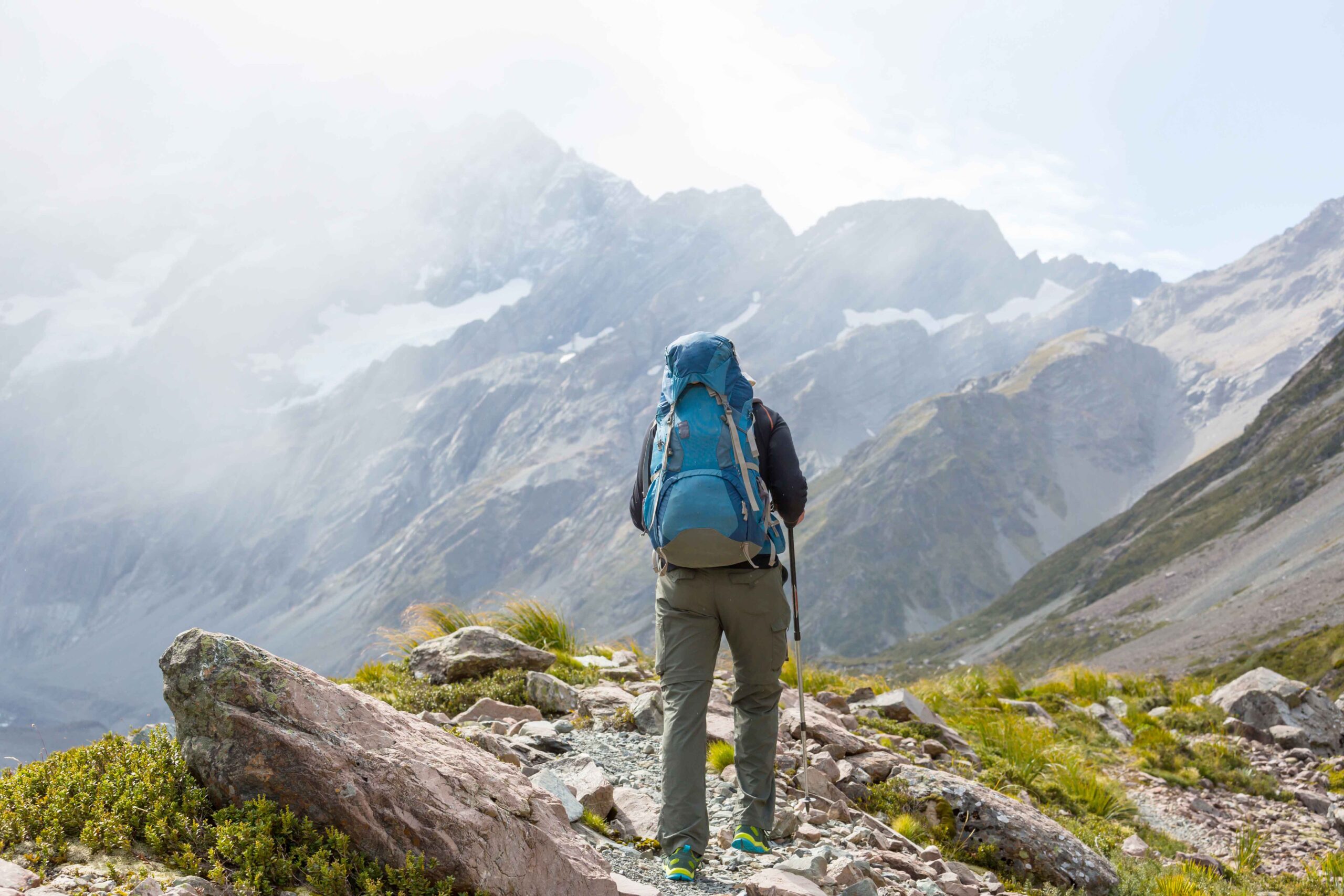
Essential TMB Packing List : Pack Smart, Hike Happy
In this guide, we’ll share our ultimate TMB packing list, along with a few extra tips and tricks. First we’ll highlight which equipment is essential, then we’ll look at how to pack your bag and make it lighter. All the information comes from our local guides, who have hiked the Tour du Mont Blanc (TMB)…

Typical TMB day : all you need to know
As experienced, local guides, we know what a typical TMB day looks like! We have hiked the Tour du Mont Blanc (TMB) many times, in June, July, August and September. Below you will find a “description of a typical day on the TMB, “day-in-the-life” style description of what a normal day on the TMB looks…

The best time to hike the Tour du Mont Blanc (TMB)
When is the best time to do the TMB? Learn the pros and cons of each month of the trekking season.
The hikers Newsletter
Get trekking info and our latest deals.
