


Walker’s Haute Route Weather and hiking season
The walker's Haute Route season is from mid-July to mid-September. Trekkoing outside the main season risks slpping on some lingering snow. Mountain transport and huts stay closed for the off-season when the rain and snow lead to difficult trail conditions.

When to hike the Haute Route from Chamonix to Zermatt and what to expect?
Some years the snow up in the mountain passes melts faster than others, so conditions can vary considerably. The hiking season for this classic trek is generally from mid-July to mid-September, although the exact window depends on snow conditions of each spring/summer. Here we have put together some pointers to help you choose when to do the trek and links where to check for more information.
Planning on trekking the Haute Route? Read up our Walker’s Haute Route info page for detailed itinerary and hikers’ FAQs.
In preparation for your hike, follow our latest trail conditions updates from Chamonix and surrounding Alpine areas. We write up a condition report monthly in the spring and early summer.
Hiking from Mid-July to August: Peak Season on the Haute Route
This is the most popular time to tackle the Haute Route, offering the safest and most reliable trail conditions.
- The Trails: Higher passes are generally clear of winter snow by mid-July.
- The Perks: All Swiss Alpine Club (SAC) huts, mountain refuges, and valley transport links (gondolas and buses) are fully operational. Alpine wildflowers are at their absolute peak in July.
- The Catch: Space in the huts is limited, meaning you need to book accommodation months in advance.
September on the Haute Route
If you prefer crisp mountain air, early to mid-September is a spectacular time to go.
- The Trails: The route is completely snow-free, and the summer crowds clear out dramatically.
- The Perks: The weather is more stable, with less rainfall and fewer afternoon storms. The larches begin turning golden by mid-month.
- The Catch: Temperatures drop noticeably, and sub-zero nights are common at hut elevation. Crucially, many mountain huts and high-altitude cable cars close by mid-September. This means your logistics require precise planning, and there are fewer “bail-out” options if you hike in late September.

Hut, Lift and bus Opening dates on the Haute Route
Local transport links
- For local buses, check out information for the Chamonix valley from https://www.chamonix-mobilite.com/en
- For the Swiss bus and train timetables, you can find everything in the national SBB app and website https://www.sbb.ch/en
Cable cars and chairlifts
- Chamonix valley lift annual opening dates https://www.montblancnaturalresort.com/en/annual-openings
- Verbier cable car openings, prices and other useful information https://verbier4vallees.ch/en/useful-information
- Grimenz and Zinal are in Val Anniviers, you can find their lift timetables here https://www.valdanniviers.ch/en/Z15410/ski-lifts
- Jungen – St. Niklaus cable car info https://graechen.ch/en/Info-service/A-Z/Cable-car-St.Niklaus-Jungen_p_593
- Zermatt cable car opening information https://www.matterhornparadise.ch/en/information/lifts-and-pistes
Mountain huts openings
Every mountain hut manages their own schedule, but one thing is sure, all the trekking huts close at the end of the summer. When planning your Haute Route trek, be sure to pre-book your overnight stays! This trail can get incredibly busy so you can’t count on finding a free bed even if you trek solo. Hikers have to keep on going to the next place or turn around if the accommodation has already sold out their capacity.
If you want to know about opening dates for a specific mountain hut, you can contact us for details. We are frequently in touch with the mountain huts along the Haute Route. We also offer ‘self-guided’ trekking packages where we book all the huts for you.
If your lunch plan counts on a mountain hut being open, call in advance and check. The opening dates are not always updated in websites or Google Maps. One legendary lunch or coffee stop is Cabane Dix, under the Riedmatten pass. It does require a detour but that just allows you to spend some extra time in this beautiful glaciated valley.
The daily weather patterns on the walker’s Haute Route
Check out the weather forecast animations of the Meteo Swiss website. Their precipitation radar and 24h forecast are precise and you can zoom the map into any Alpine valley in Swizerland. We love their mobile app too, offering this same rain radar function, which is very helpful when planning your hiking day. The Meteo Swiss forecasts are incredibly accurate, thanks to the dense network of weather sensors high up in the Swiss Alps.
What to expect from the Alpine weather
Summer Temperatures: In July and August, valley temperatures average a pleasant 20∘C to 25∘C, but during heat waves it’s not uncommon to get temperatures above 30∘C. Expect a significant drop as you gain altitude; high passes usually sit between 5∘C and 18∘C during the day. When you climb up to 2900m altitude the temperature and the wind can be very cold. However, on a calm and sunny day the climb up to a mountain pass can be baking hot.
The afternoon thunderstorm risk: Hot summer days regularly trigger convective heat build-ups, leading to sudden, afternoon thunderstorms. Standard practice on the Haute Route is to start hiking early to cross the high passes before 2:00 PM if possible.
Unseasonal snow: It is not uncommon to experience a sudden cold snap that dumps a few inches of fresh summer snow on the exposed ridges in July or August. It usually melts within 24 to 48 hours but demands solid layering and good footwear.
This means that you need to pack for a big range of temperatures. Check out our Alpine trekking packing list or watch a little video by our team in Chamonix.
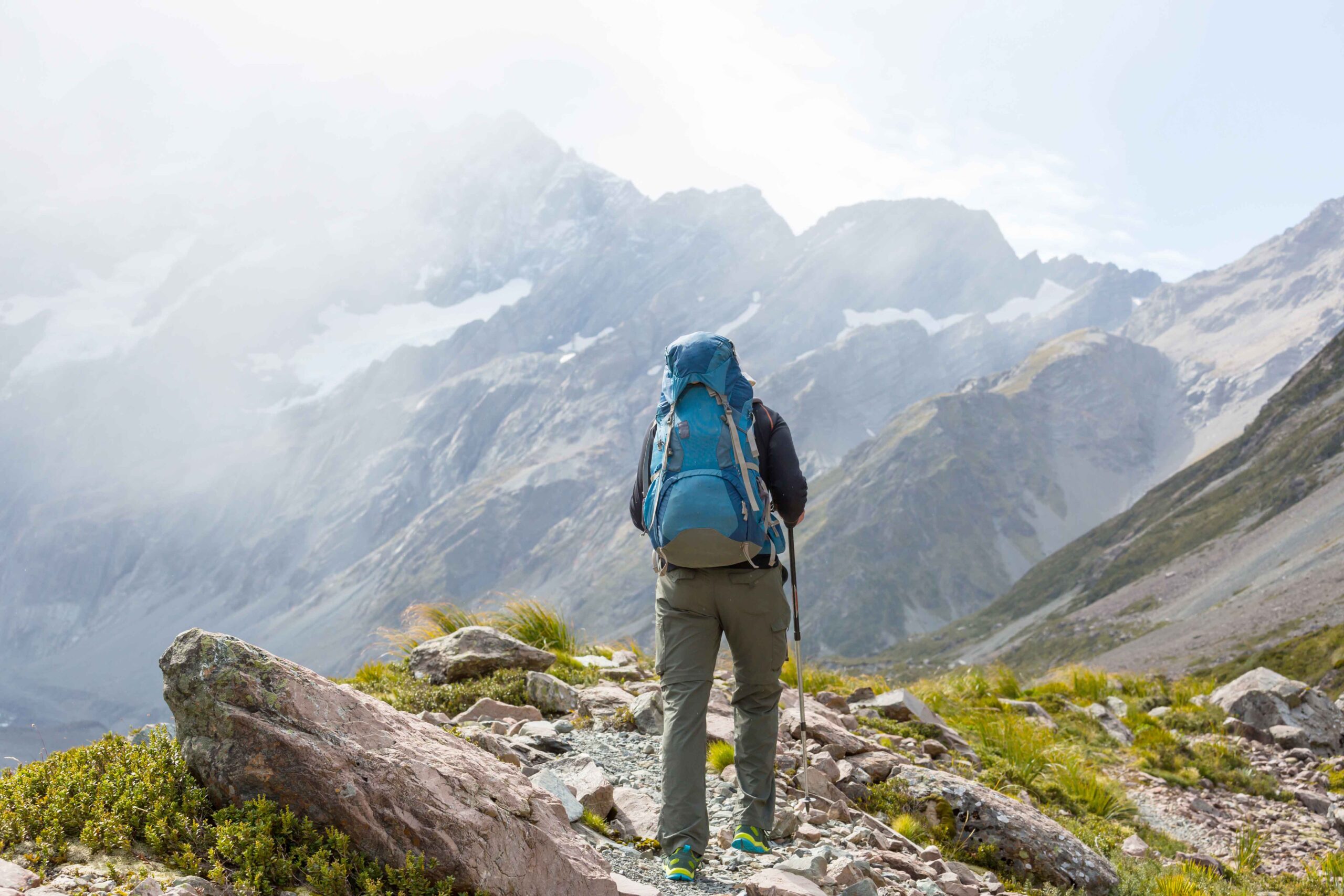

Photo of the morning clouds rolling over the Dixance lake, when descending from Col du Roux on Haute Route.
As a summary, please remember that the weather in the mountains can change incredibly quickly, so be sure you are prepared. This means you must check every morning that you carry enough water for the day, good sun protection, sufficiently warm layers and of course the waterproof layers.
If you plan for the unexpected in terms of the weather, as well as a change in speed of your group, you’ll be ok to wait even if someone is tired and needs extra breaks! After all, you want to enjoy the incredible terrain and take in the stunning views along the route without worrying about the weather too much.
The hikers Newsletter
Get trekking info and our latest deals.
