

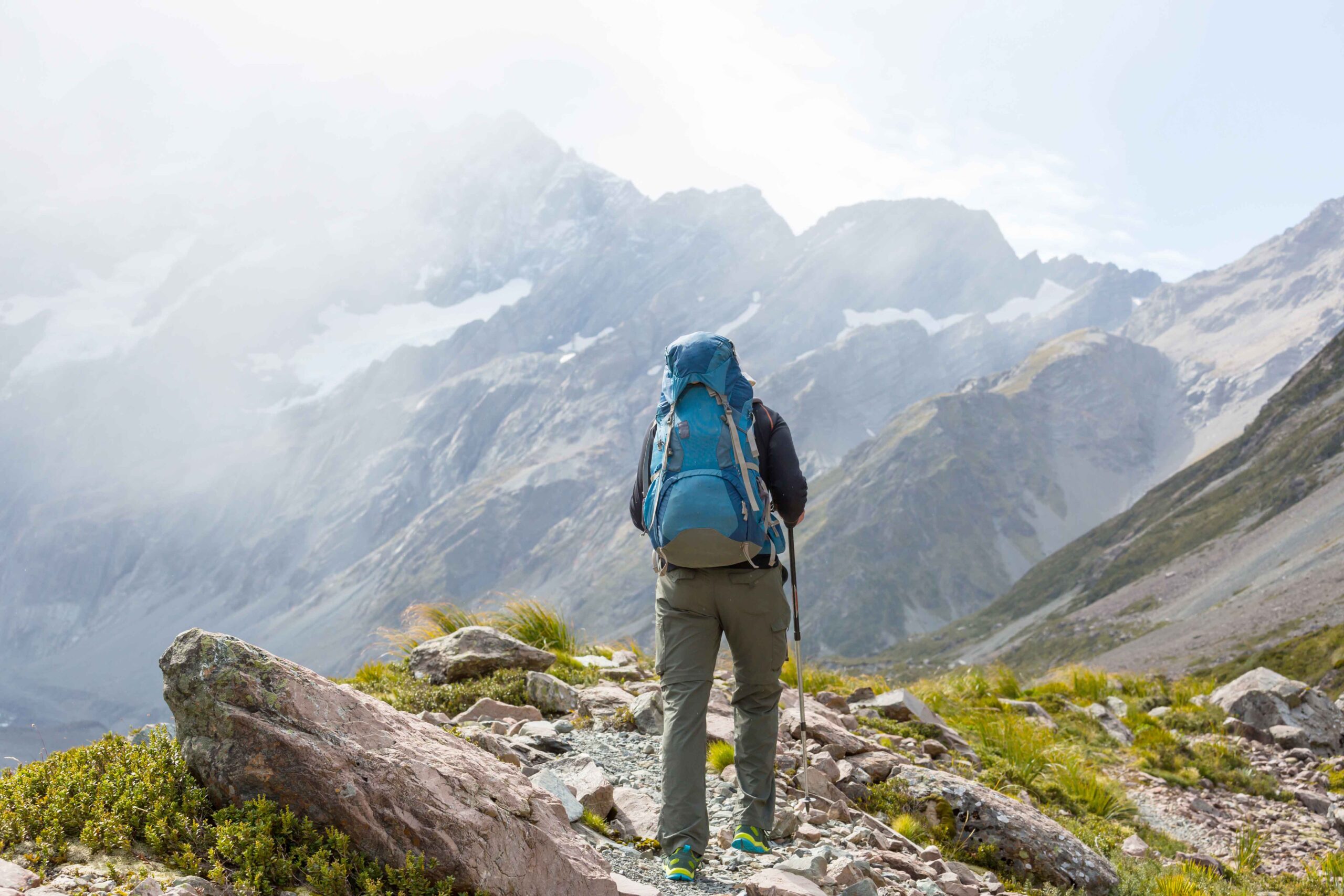
Essential TMB Packing List : Pack Smart, Hike Happy

In this guide, we’ll share our ultimate TMB packing list, along with a few extra tips and tricks. First we’ll highlight which equipment is essential, then we’ll look at how to pack your bag and make it lighter. All the information comes from our local guides, who have hiked the Tour du Mont Blanc (TMB) many times! Although we’ve written this guide to help TMB hikers, the information is relevant for anyone planning a multi-day hike in the Alps or Dolomites. Ultimately, our goal is simple: to help you prepare well and enjoy a safe, memorable hike in the mountains. For more information on the TMB, visit our FAQ and itinerary page.
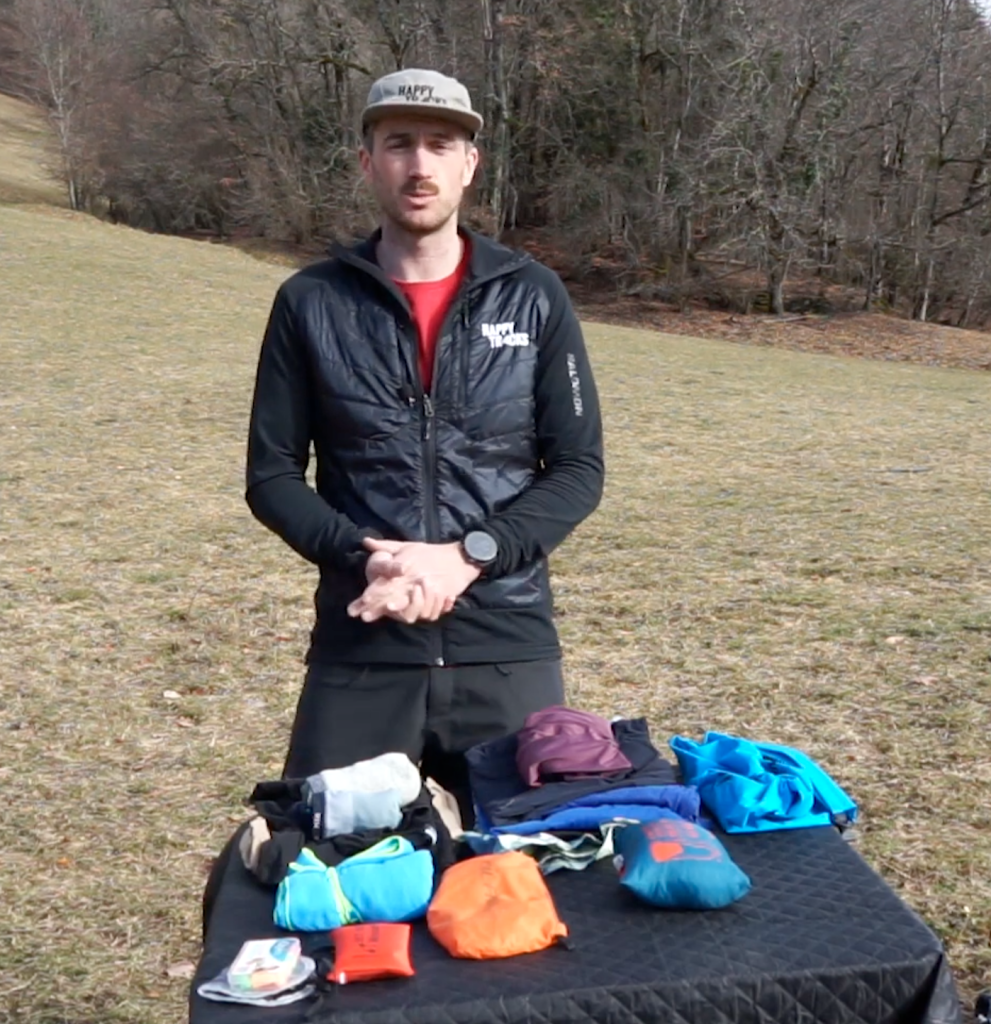
Short on time? In that case, jump down to our full TMB packing list, or alternatively watch this video by Happy Tracks guides, Grant and Joel.
Before you start
Before you begin packing, it’s worth running through the following questions:
- How many days will you be hiking for?
- Are you staying in mountain refuges, hotels, or a mix of the two?
- Will it be possible to buy food on the trail?
- How often will you pass reliable, safe water sources?
- Have you booked / is it possible to book a luggage transfer?
Below, we share our recommended TMB packing list, designed for around 10 days of hiking. TMB hikers typically stay in both hotels and mountain refuges, where they can buy breakfast and an evening meal. It’s often possible to buy lunch or snacks along the trail, and reliable water sources are available. Although it’s easy to book a luggage transfer, it’s possible to wash yours clothes regularly along the way. Because of this, most TMB hikers carry all their gear, so our packing list below is for hikers not using a luggage transfer.
TMB Packing List: Essential Equipment
Some gear is absolutely essential for the Tour du Mont Blanc. Make sure these items are on your TMB packing list. You’ll need them for the Haute Route and the Alta Via 1 too :
- A 35 to 40 litre backpack with a waterproof cover
- Durable, waterproof hiking boots or trail shoes with good tread
- Lightweight footwear for the evenings (for example sandals, trainers, crocs)
- Water bottles or a water bladder, with a minimum capacity of 2 litres
- A sleeping bag liner, made from silk or cotton
- Dry bags to keep your spare clothes in
Hiking Poles and Micro-skipes
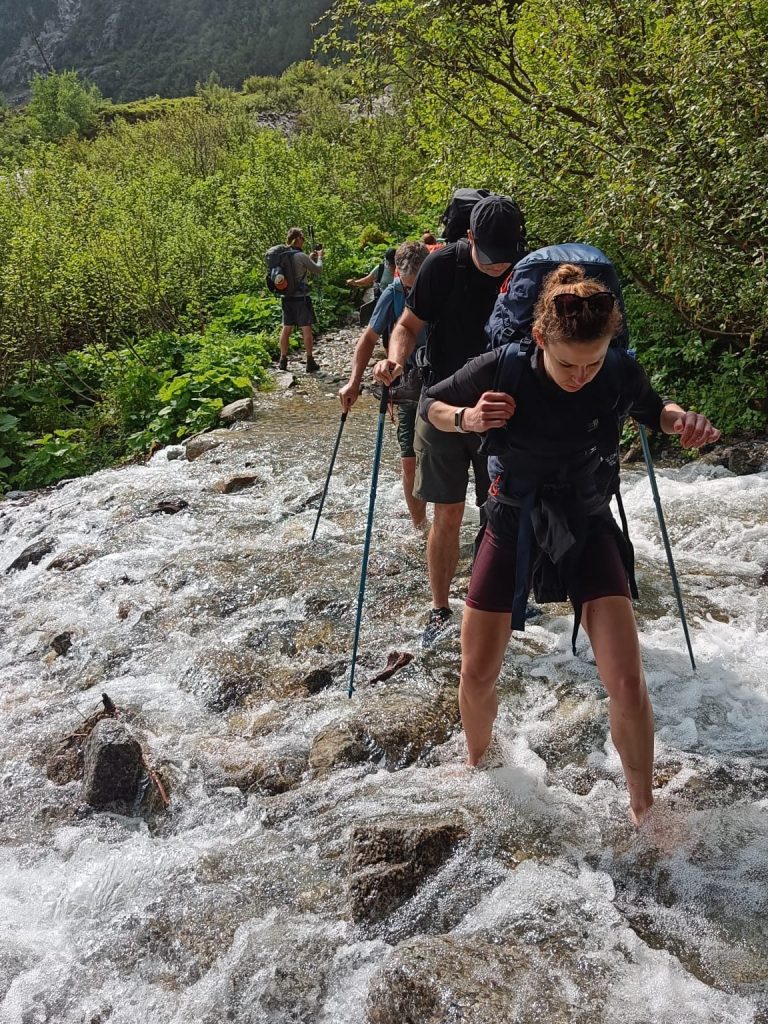
While not strictly “essential,” we recommend adding hiking poles to your TMB kit list. They’re a lifesaver for anyone with injuries, and most of our guides use them too. Poles help maintain good posture, reduce fatigue, and lower the risk of injury. Look for lightweight, collapsible poles that are easy to stow when you don’t need them.
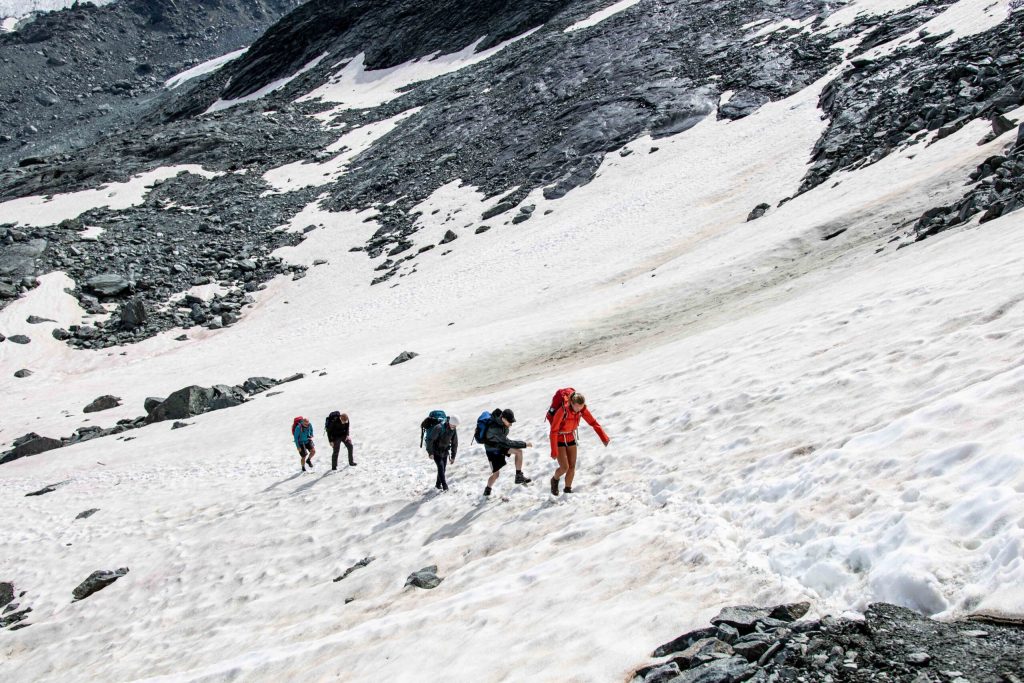
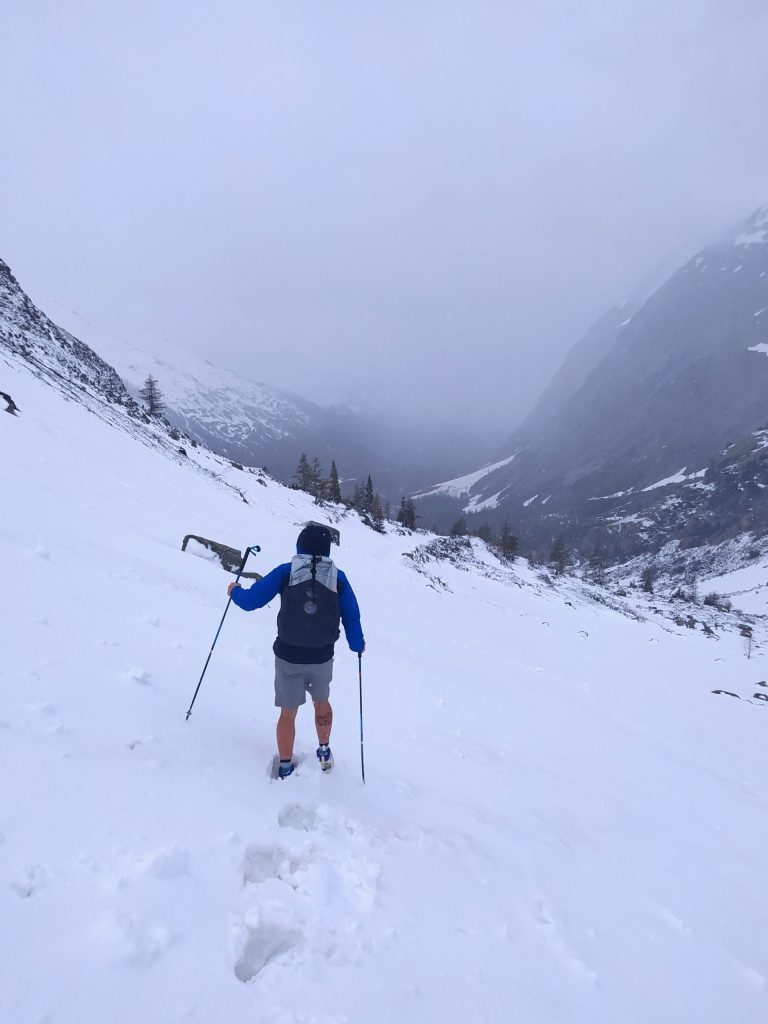
We also suggest carrying micro-spikes (small, lightweight crampons) if you’re hiking the TMB in June or early July. Snow often lingers on higher passes, and micro-spikes make those patches much safer. Check our 2025 conditions report to see how snow varies month to month.
You can find quality hiking poles and micro-spikes at most outdoor retailers, such as Decathlon (Europe) and REI Co-op (US).
TMB Packing List : Clothes
When planning your hiking clothes, it’s useful to categorise them into “base layers”, “mid-layers” and “outer layers”. Base layers are those that sit closest to your skin, and you won’t normally change these during the day. Mid- and outer layers protect you from the elements. Make sure to add these essential layers to your TMB Packing List :
Base layers :
- Thermal, long-sleeve top
- Two technical t-shirts, plus one comfortable top that you can wear in the evenings and sleep in
- Two to three pairs of hiking socks
- One or two pairs of hiking trousers
- Comfortable trousers or leggings that you can wear in the evenings and sleep in
Mid- and Outer layers :
- Fleece or warm sweater
- Insulated coat, such as a light down jacket or a PrimaLoft.
- Water and windproof jacket with a hood (read this article about choosing a waterproof)
- Waterproof trousers
- A warm hat or buff
- Light-weight gloves
- Sunglasses and a cap
How necessary are all these layers?
When hiking at altitude, you need to be prepared for all weather conditions, which means carrying multiple layers and good-quality waterproof shells. However, you can reduce the weight of your bag by choosing light, technical clothing.
Easily Forgotten Essentials
In our experience, hikers remember the technical items – waterproofs, layers, etc – but forget miscilanious items or everyday toilettries. That’s why it’s a good idea to write your list down in advance!
TMB Packing List : Toilettries
What toiletries you bring will depend on your own needs, but we suggest adding the following to your TMB packing list :
- Toothbrush and mini toothpaste
- Small bar of soap
- Deodorant
- 1 small, quick-drying towel
- Ear plugs to wear in the shared dormitories of refuges
- An eye mask (or use your buff!)
- 1x full pack of blister plasters, such as Compeed
- Sunscreen (SPF +50)
- Lip balm with sun protection
Sunscreen is essential! On the TMB, you’ll be hiking above the tree line at high altitudes. Because of this, the sun rays are much stronger, and as a result you’ll find that you burn much easier than normal.
TMB Packing List : Miscilanious items
Finally, these items should not be forgotten! Add them to your TMB packing list now before you forget!
- Your mobile phone, a charger, and (if necessary) the correct plug adaptor
- A small first-aid kit, which includes bandages, antiseptic cream / spray / wipes, and tweezers
- Cash to buy food / snacks / drinks / souvenirs, as some refuges and small shops won’t accept card payment
- Any specific snacking items that you particularly like
- A map, guidebook or both (for self-guided hikers)
How to pack for the TMB?
If you’re an experienced hiker, you might already have all these essential items at home. However, if you can, it’s worth assessing each item and updating any that are especially heavy. Look for soft-flask water bottles or water bladders, as these are much lighter than traditional bottles. Only bring the toiletries that you really need. For example, bring a travel tube of toothpaste and a small bar of soap. Pack every item into your backpack and take it for a test-hike; ensure it sits snuggly, is not too bulky, and that all of your kit fits comfortably inside. Doing a test-hike is also a good way to learn how best to use all the pockets in your bag.
TMB PACKing LIST Tips
Organising your bag properly will save you time and a good deal of stress. Here are our top tips on which items to put where…
- At the bottom of your bag…
Put your spare clothes, socks and evening items (toiletries, sleeping bag liner, etc.) all into a dry bag. It would be sad if any of these got wet! - At the top of your bag…
Pack your first-aid kit, water bottles, sunscreen, sunglasses, cap, and your mid- and outer layers. Most multi-day hiking bags have bottle holders and small zip pockets for valuables. Stash your extra layers and lunch near the top, and keep snacks in side pockets.
TMB PACKING LIST In Full…
Here is our full TMB packing list, all together :
Equipment
- A 35 to 40 litre backpack with a waterproof cover
- Durable, waterproof hiking boots or trail shoes with good tread
- Lightweight footwear for the evenings (e.g. sandals, trainers, crocs)
- Water bottles or a water bladder, with a minimum capacity of 2 litres
- A sleeping bag liner, made from silk or cotton
- Dry bags to keep your spare clothes in
- Hiking poles
Clothing
- Thermal, long-sleeve top
- Two technical t-shirts, plus one comfortable top that you can wear in the evenings and sleep in
- Two to three pairs of hiking socks
- One or two pairs of hiking trousers
- Comfortable trousers or leggings that you can wear in the evenings and sleep in
- Fleece or warm sweater
- Insulated coat, such as a light down jacket or a PrimaLoft.
- Water and windproof jacket with a hood
- Waterproof trousers
- A warm hat or buff
- Light-weight gloves
- Sunglasses and a cap
Toiletries
- Toothbrush and toothpaste
- Soap
- Deodorant
- A small, quick-drying towel
- Ear plugs to wear in the shared dormitories of refuges
- An eye mask (or use your buff!)
- A full pack of blister plasters, such as Compeed
- Sunscreen (SPF +50)
Miscellaneous
- Your mobile phone, a charger, and (if necessary) the correct plug adaptor
- A small first-aid kit, which includes bandages, antiseptic cream / spray / wipes, and tweezers
- Cash to buy food / snacks / drinks / souvenirs, as some refuges and small shops won’t accept card payment
- Any specific snacking items that you particularly like
- A map, guidebook or both (for self-guided hikers)
We hope you’ve found this post useful. If you have any questions or suggestions, please leave us a comment below.
For more information about what to pack for the Tour du Mont Blanc, watch this You Tube video by Happy Tracks guides, Grant and Joel!
The hikers Newsletter
Get trekking info and our latest deals.
