

tour du mont blanc weather
Learn more about the weather on the Tour du Mont Blanc hike, and in the Alps in general. Local guides explain how to stay safe in the mountains and prepare for the varied summer conditions.

In this artical we’ll describe typical Tour du Mont Blanc weather, breaking the season up month-by-month. We’ll also provide information on the best weather apps, which you can use to forecast storms and avoid getting caught out. By writing this artical, we hope to help self-guided hikers stay safe in the mountains, but guided hikers will also find it useful. You can never be “too prepared”, and by learning about typical TMB weather, you’ll get the most out of your trip. The information below comes from our team of local guides and mountain experts.

Tmb summer overveiw
In the Alps, the “summer” months are June, July, August and September. The first Tour du Mont Blanc (TMB) groups normally start hiking in early June, and the last groups start in late September. Although some people hike the TMB outside of this typical window, it is not advisable! Most of the refuges don’t open until June, and the snow conditions can make the route very dangerous. In general, June and September are cool, while July and August can be very hot.
Tour du mont blanc weather in June
In June you’ll typically get cool, dry weather, with valley temperatures at around 18°C (64°F). There will normally be large patches of snow on the high passes, and smaller patches in the forests. It doesn’t often rain in June, and the temperatures don’t usually get too high. Because of the cooler weather, we don’t see many thunderstorms hiking the TMB in June.
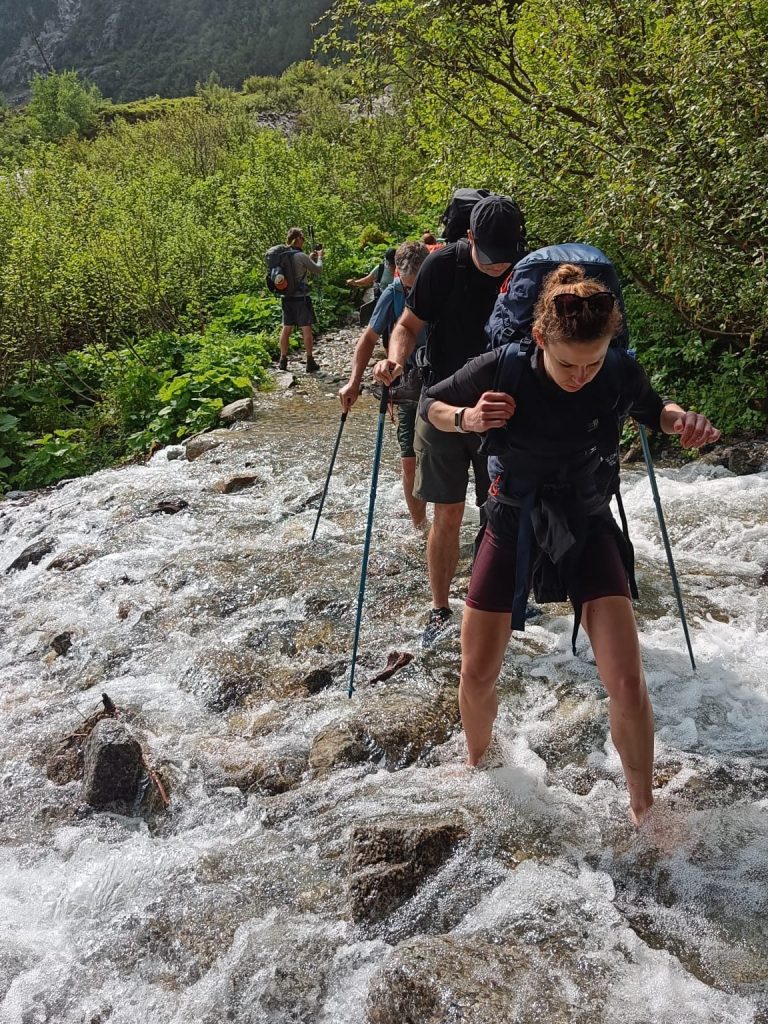
That said, we’ve seen a change in Tour du Mont Blanc weather the last few years! In 2024 we had so much rain in Val Ferret that a road was closed due to landslide (see this conditions report for more info!), and this year (2025) we had unseasonably warm weather! Given this, we always advise hikers to be prepared for a range of conditions! Even if you are forecast cool, dry weather, we would suggest carrying full waterproofs and some warm-weather clothes just in case! See our packing list for more information on this topic!
what does this mean for june TMB hikers?
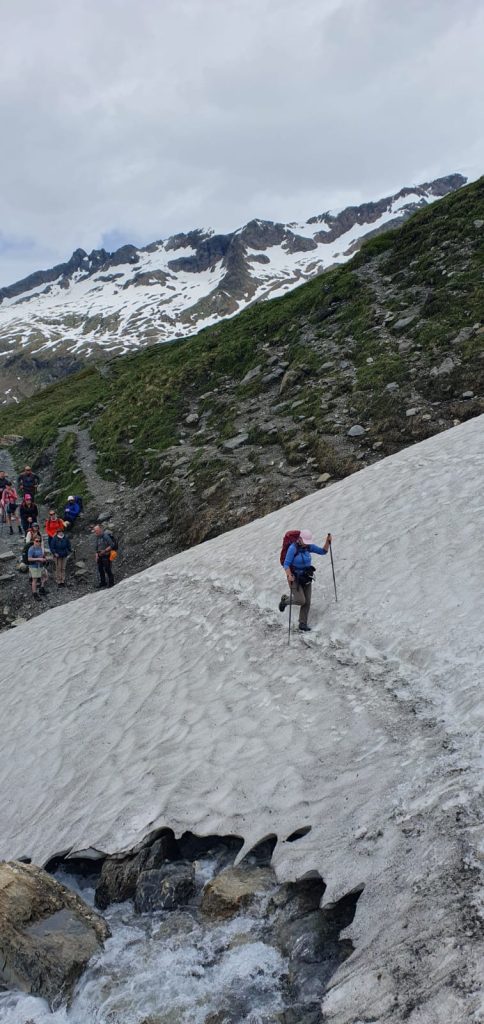
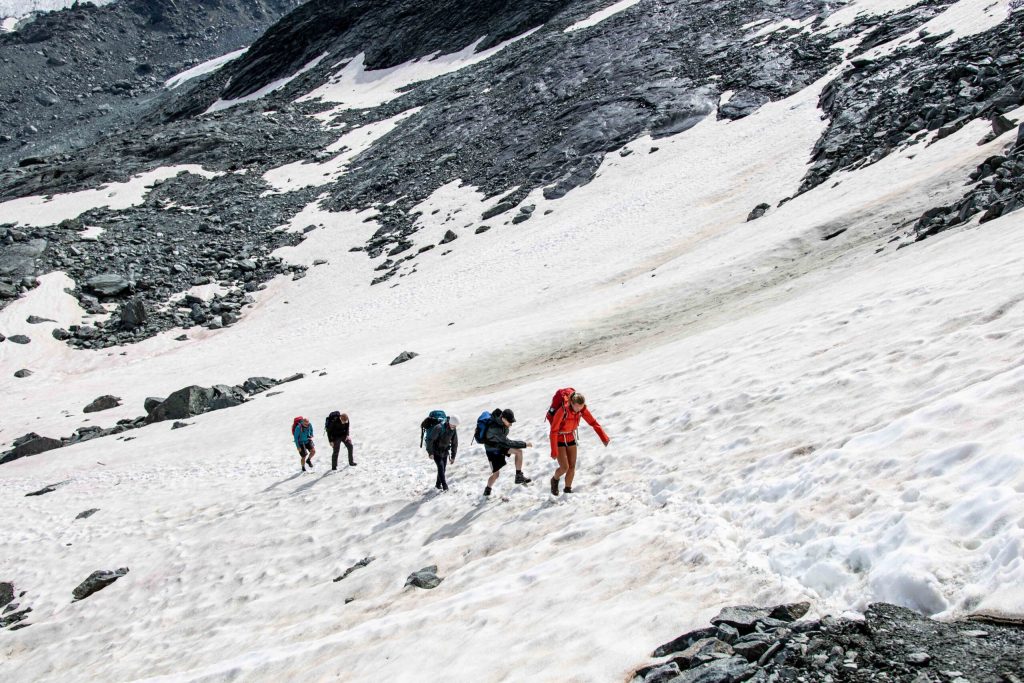
If you’re planning to hike the Tour du Mont Blanc in June, you should be confident crossing large patches of snow. In a “noramal” year, you’ll have to traverse quite steep, snowy slopes. There’s often a lot of snow up high, such as on Grand Col Ferret, and the forest trails can also be snowy. Additionally, you may have to cross a number of snow bridges, which become increasingly difficult towards the end of the month and into July. These bridges go over streams or gaps between rocks, and as they thin, they start to collapse in on themselves (see our June 2025 report for more info).
Despite these challenges, June can be an excellent time to hike the TMB. The trails are generally less busy, and the cooler temperatures make hiking easier! You’re less likely to encounter afternoon storms in June, so you have less pressure to get up and over the high passes quickly.
For experienced hikers, or for hikers using a guide, the snowy conditions in June will be managable! However, if you’re planning a self-guided TMB and you do not have experience hiking on snow, we’d recommend that you start later in the season.
Tour du mont blanc weather in july
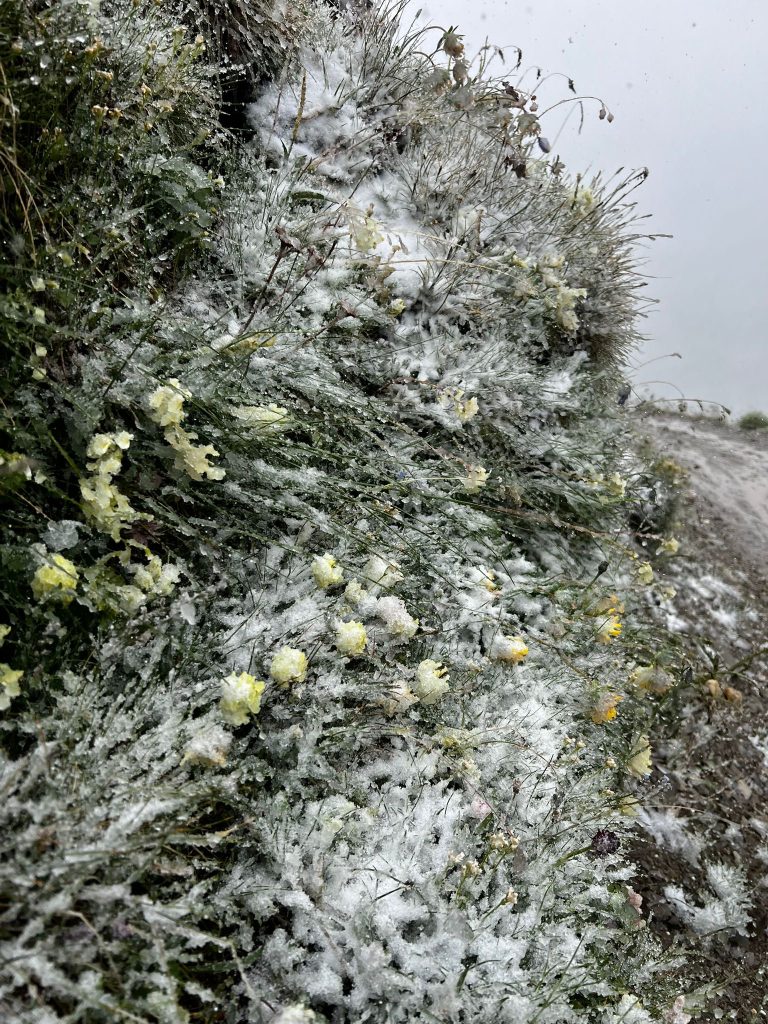
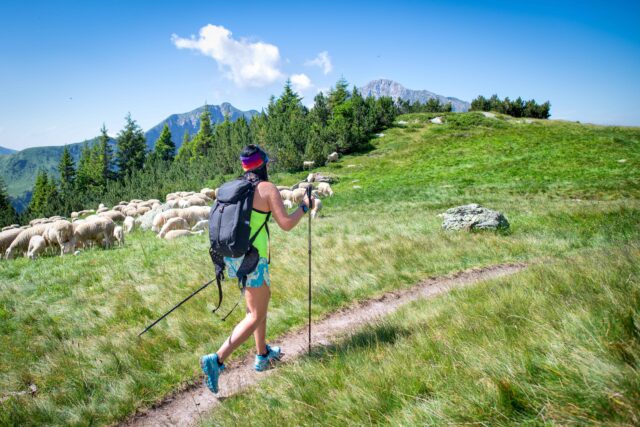
In July we typically get warmer days, and because of this we start to see afternoon showers and thunderstorms. The average valley temperatures are around 21°C, but in recent years they’ve been much higher! That said, we’ve also had fresh snow in July (see this report from 2025), and it’s not uncommon to have completely different weather conditions in one tour.
What does this mean for July TMB hikers?
The Tour du Mont Blanc weather conditions are hard to forecast in July. This is because the high temperatures can cause big afternoon thunderstorms that seem to come from nowhere. We advise starting each day early, so that you’re over the high passes before late afternoon. And, of course, make sure to pack full waterproof kit!
The snow has often melted from most of the trails by mid- July, but there will normally be a few difficult snow bridges to cross. These are often more dangerous in July because they become so thin. If you are not using a guide, make sure to check Tour du Mont Blanc weather and trail reports for the latest updates.
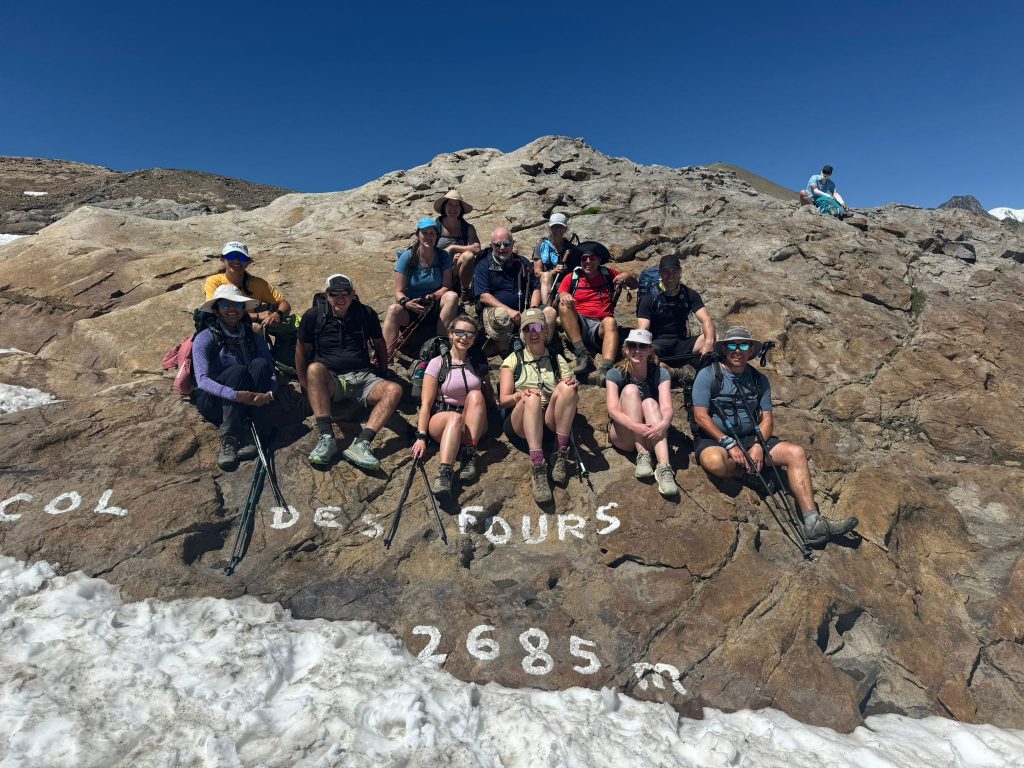
One of the perks of hiking the TMB in July is the (potential!) possibility of hiking a variant route. Because most of the snow has normally melted, the higher passes are fairly dry. For experienced hikers, challenge yourself to cross Col des Fours and / or Fenêtre d’Arpette (but make sure to set off early!).
Tour du mont blanc weather in August
August is normally the warmest month, with valley temperatures sometimes exceeding 30°C (86°F).
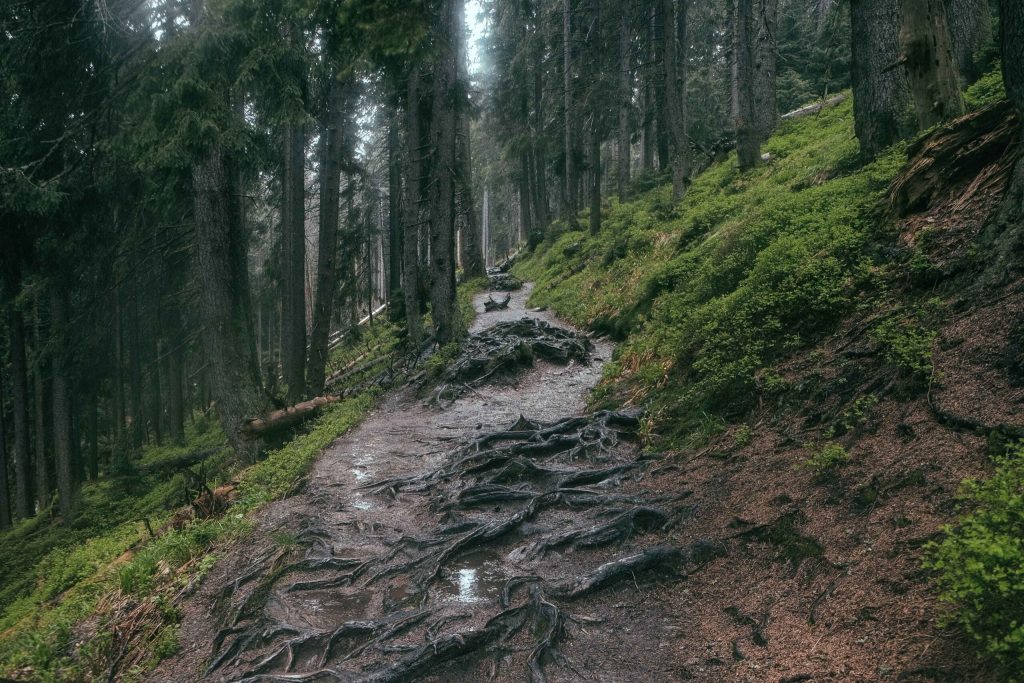
Because of these high temperatures, and despite what you might expect, August is often the wettest month. Expect afternoon showers and even thunderstorms, but you’re unlikely to cross any snow patches. Tour du Mont Blanc weather conditions are very unpredictable in August, so it’s especially important to be prepared with the right kit.

What does this mean for August TMB hikers?
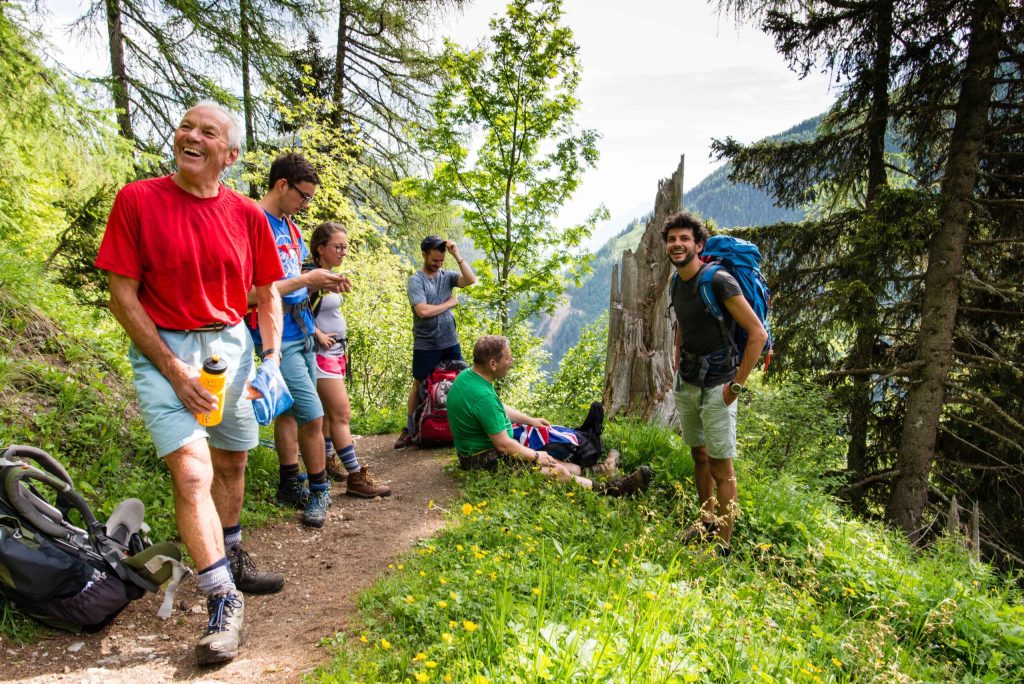
Make sure to carry full waterproof kit, even if you’re forecasted dry weather. The temperatures can get very high, so you should bring lightweight, breathable clothing – we normally wear shorts and t-shirts in August! But once you get above the trees, the alpine air can feel refreshingly cool, despite the valley temperatures. It’s unlikely that you’ll have to cross any snow patches. Make sure to leave nice and early, so as to avoid corssing high passes in the afternoon.
Another thing to think about is the water sources. Towards the end of July / through August we sometimes get a draught in the area, and because of this some of the water sources dry up. It’s a good idea to check local Tour du Mont Blanc weather and trail reports, which detail whether the fountains are still working. You will normally be able to fill up your bottles at least once a day.
Tour du mont blanc weather in September
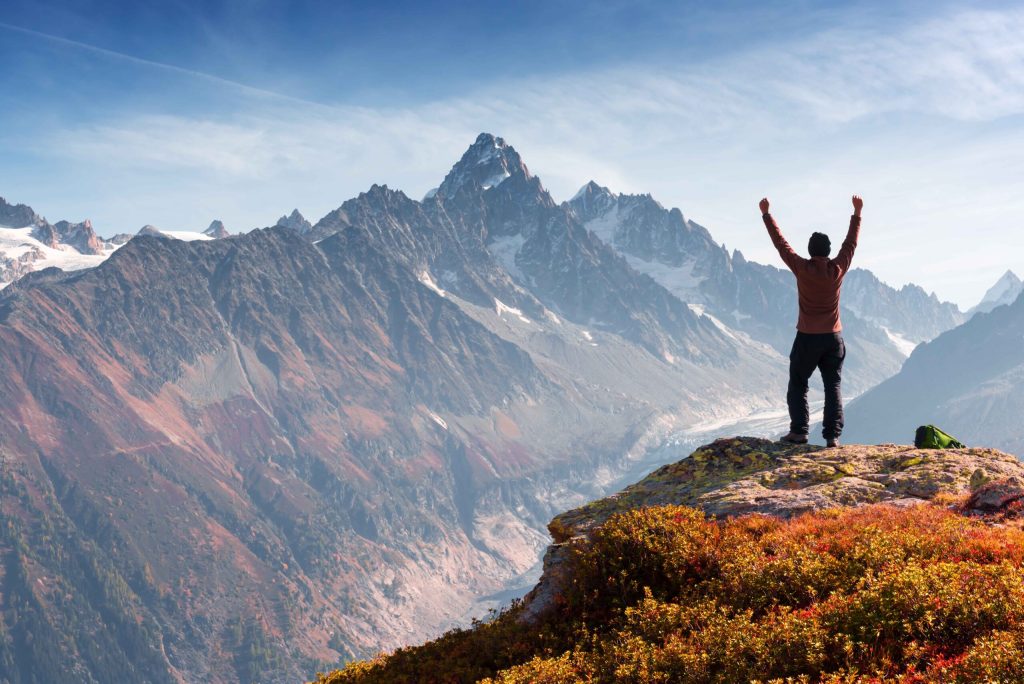
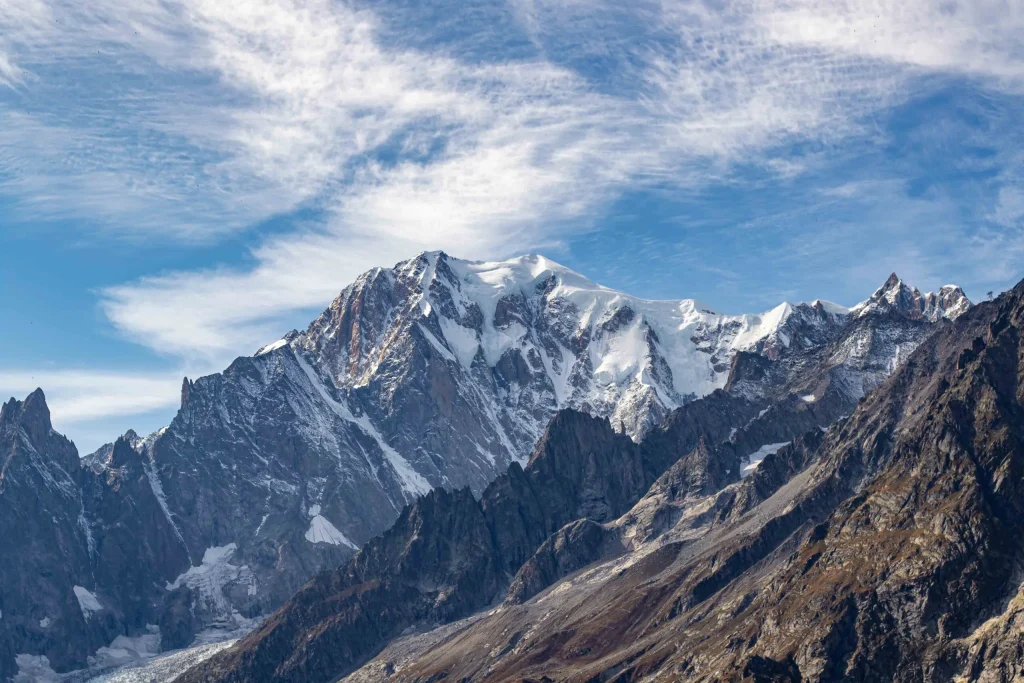
By September, the temperatures start to drop again, and we tend to have fewer storms. You might be surprised by this, but September is actually the driest month! It’s rare to get any big snow storms, but you might get a fresh dusting on the higher passes.
What does this mean for September TMB hikers?
We’d advise that you pack some warmer layers, as it can get chilly in September, especially in the mornings. You’re unlikely to see any big thunderstorms, but as always, make sure to set off early and carry waterproofs just in case!
prepare for all weathers
We don’t normally get showers until the late afternoon. By this time, so long as you set off early, you should be in the safety of your accommodation. That said, the mountains can be unpredictable! A beautifully clear day can suddenly change, and with little warning. Because of this, it’s important to be prepared. Make sure you have a good quality waterproof coat, and we recommend using a waterproof bag-cover (see our packing list for more information on gear).
Tour du Mont Blanc Altitude
Another factor to consider is the altitude. In one day, it’s not uncommon to climb 1000 metres. The temperatures in the valley are significantly warmer than the temperatures up high. Make sure you have warm layers, and that they’re accessible. Pack them in the top of your bag, so that you can easily put on and extra layer if you get cold. A warm hat is essential, an we recommend that you pack a pair of thick gloves.
Tour du Mont Blanc storms
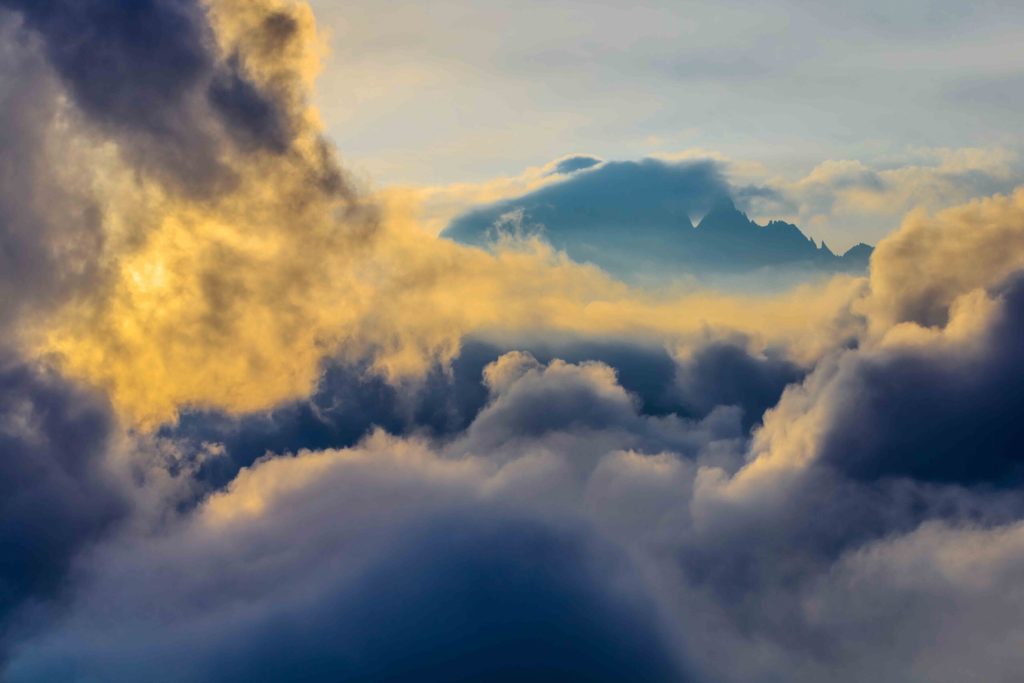
Below we’ll detail advice from our team of guides on how to prepare for inclemental weather, such lightning, flash floods, fog and snow…
Plan Each Day
Study the statistics of each day, making note of the distance and elevation. Don’t over-estimate your fitness, or the fitness of your group. Make sure to give yourself enough time to get down safely. Re-evaluate at the end of each day and plan to set off earlier if need’s be.
Check the weather forecast
Check the weather forecast as often as possible. When you are in the towns, the easiest option is to use the online forecasts and weather apps (scroll down for more information). Alternatively, the local Tourist Information Centres will be able to give you a weather forecast When you are up high, you might not have signal or internet. Most mountain refuges display the forecast in the dinning areas. If this is not apparent, ask the refuge guardian. While you’re on the trail, look for signs of weather deterioration. If you notice that the weather is quickly deteriorating, it’s better to go back or to wait for it to pass than to venture into dangerous, exposed areas.
Avoid lightning…
If a storm is forecasted for the late afternoon, make sure to set off early. Thunderstorms can normally be avoided with good planning. However, if you do find yourself on the trail during a thunderstorm, avoid mountain passes (“cols”) and exposed ridges. Don’t climb out of the forest, and don’t shelter under rocks.
Instead, take your rucksack off and kneel on top of it. This keeps you safely off the ground. Put your head down, and put your hands on your knees. If you have been using poles, make sure to drop them; do not hold onto anything that is made out of metal.
Carry a first-aid kit
Make sure to carry a first-aid kit. The following items are essential : plasters, blister plasters, alcohol wipes, a bandage that can be used for cuts or to strap up a strained ankle. We also recommend that you pack a foil blanket. If you’re doing a Self-Guided TMB, we’ll provide you with a simple first-aid kit and a foil blanket. Take a few extra rations of food, and carry more water than you think you might need. Be vigilant to signs of fatigue or sickness, in yourself and in others. Remember that the altitude can affect some people more than others. For self-guided trekkers, consider having one of your group do a simple First-Aid Training.
Accident protocol
In the unlikely event of an accident, make sure the injured person is in a safe place. Keep the injured person warm by giving them warm layers of clothing, and putting them into a foil blanket. If you have signal on your phone, call 112. This number can be used in France, Italy and Switzerland. There are a few areas on the TMB where you might not be able to get phone signal. In these areas, you will always be close to a mountain refuge, so the best thing to do it to send one person (if possible) back to the refuge to seek assistance. For Guided-Trekkers, your guide will carry an emergency satellite phone.
Online Weather Forecasts
What is the best weather app to use for the Tour du Mont Blanc? Because the classic route passes through 3 different countries (France, Italy, Switzerland), it can be confusing when trying to find an up-to-date weather forecast. Here are the weather apps that we use, and that we find the most accurate :
France: Chamonix – Meteo
Italy: Weather Forecast Autonomous Region Aosta
Switzerland: Meteo Swiss
Tour du Mont Blanc weather summary
Each “summer” month is uniquely beautiful, and comes with its own challenges. Despite there being fairly regular patterns, the Tour du Mont Blanc weather is unpredictable! Make sure to be prepared for all weathers!
The best time to do the TMB is highly subjective, and will depend on your own personal preferences. For example, do you prefer warmer or cooler temperatures? How likely is it that you’ll want to shorten a day? To help answer this question, read our post on the topic here.
The hikers Newsletter
Get trekking info and our latest deals.
